How to drive an automatic car in India: P, R, N, D, hills, parking and jams
How to drive an automatic car in India: P, R, N and D, creep, right foot only, hills, parking, AMT vs CVT vs torque converter vs DCT, and the licence rules.
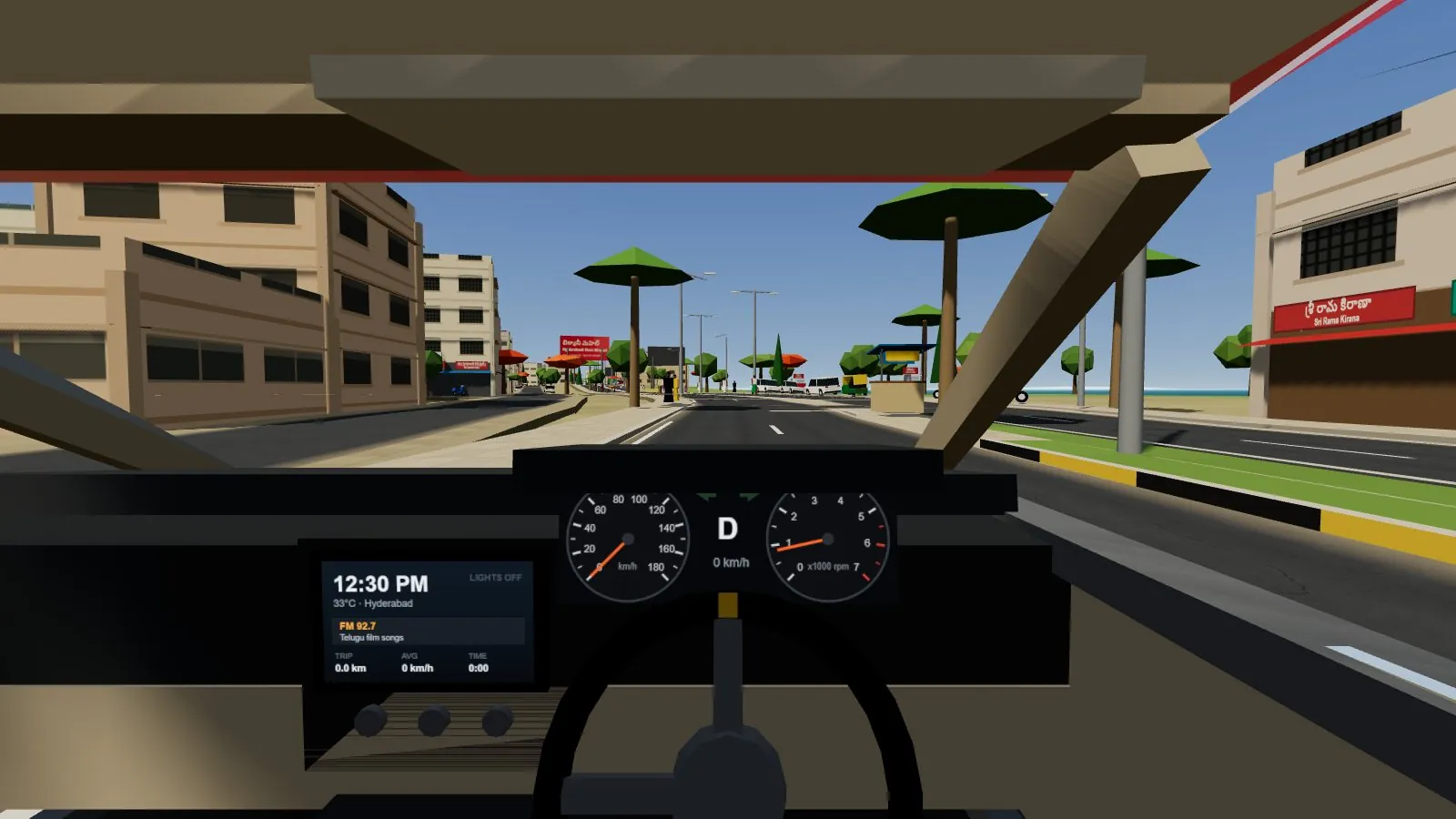
To drive an automatic car, press the brake with your right foot, start the engine, move the selector from P to D, release the handbrake and ease off the brake: the car creeps forward and changes gear by itself. You use only your right foot, for both pedals, and only ever select P or R when the car is stopped.
Automatics have become common in India, from small hatchbacks to SUVs, and they make Hyderabad's stop-start traffic much less tiring. This guide covers the controls, the habits that matter and the different kinds of automatic sold in India. It is written for car drivers learning with an instructor or a licensed driver beside them.
What do P, R, N and D mean?
They are the selector positions: Park, Reverse, Neutral and Drive. Most cars need your foot on the brake before the selector will move out of P.
| Position | What it does | When to use it |
|---|---|---|
| P (Park) | Locks the gearbox so the car cannot roll | When parked, with the handbrake on. Most cars start only in P or N. |
| R (Reverse) | Drives the car backwards | Only when fully stopped. Check all round first. |
| N (Neutral) | Disconnects the engine from the wheels | Being pushed or towed, or a long wait with the brake held. Never for coasting. |
| D (Drive) | Moves forward and changes gears automatically | Almost all normal driving |
| M, +/-, S or L | Manual, sport or low modes on some cars | Holding a lower gear on steep hills or for engine braking downhill. Check your owner's manual. |
How do you start and stop smoothly?
Keep your right foot on the brake whenever you are stationary in D or R, and let the car's creep do the slow work.
Moving off
- Foot firmly on the brake, then start the engine.
- Select D (or R), and wait a moment for the gear to engage.
- Release the handbrake, check mirrors and blind spot, indicate.
- Lift off the brake gently. The car creeps forward; add accelerator smoothly if you need more speed.
Creep
Most automatics move forward slowly in D, or backwards in R, with no accelerator at all. This is called creep, and it is your best friend in slow traffic and when parking: control your speed with the brake alone. The amount of creep varies between cars and types of gearbox, so learn your car's behaviour in an empty space.
Right foot only
Use your right foot for both pedals and rest your left foot on the floor or the footrest. Drivers who move from a manual sometimes stab at the brake with the left foot, thinking it is the clutch, which brings the car to a sudden halt. Riders moving from a scooter, where both hands brake, also need to retrain; see our two-wheeler to car tips.
Hills, ramps and parking
On slopes
Automatics are easier on slopes than manuals, but some can still roll back, so keep your foot on the brake until you are ready to go.
- Starting uphill. Move your right foot from brake to accelerator smoothly and without delay. Many newer cars have hill-hold assist, which holds the brake for a second or two; check whether yours does. Use the handbrake if you are unsure.
- Going downhill. On long steep descents, a lower gear (L, 2 or manual mode) lets the engine help slow the car, so you do not overheat the brakes.
- Basement and mall ramps. Creep up steady, with your foot ready on the brake. Do not let the car stop and roll on a steep ramp if you can avoid it.
- Flyover queues. On an incline in a jam, hold the brake; do not rely on creep to hold you still.
Parking an automatic
- Use creep and the brake to control speed as you manoeuvre. You rarely need the accelerator.
- Come to a complete stop with your foot on the brake.
- Apply the handbrake, then select P.
- Switch off the engine, and only then release the brake pedal.
Applying the handbrake before P means the car's weight rests on the brake rather than the small locking pin in the gearbox, which matters on a slope. For where to park in the city, see our Hyderabad parking guide.
AMT, CVT, torque converter or DCT?
All four are "automatic" to drive, with P, R, N and D, but they feel different. Here is how they compare in cars sold in India, as a general guide; individual models vary.
| Type | How it works | How it feels | Watch out for |
|---|---|---|---|
| AMT (automated manual) | A manual gearbox with a computer working the clutch and gears | A noticeable pause, or "head nod", at each gear change, especially under hard acceleration | Some roll back on slopes; ease off the accelerator slightly to smooth changes |
| CVT (continuously variable) | Belt and pulleys give smoothly changing ratios with no fixed gears | Very smooth in traffic; engine noise can rise before the car speeds up | Feels less eager under full throttle; drive smoothly |
| Torque converter (AT) | A fluid coupling and planetary gears, the traditional automatic | Smooth changes and strong creep; comfortable in stop-start traffic | Usually adds cost compared with an AMT |
| DCT or DSG (dual-clutch) | Two computer-controlled clutches, one for odd and one for even gears | Very quick changes, sporty | Can be jerky at crawling speed; avoid holding the car on a slope with the accelerator |
For heavy city traffic, many drivers prefer the smoothness of a torque converter or CVT, while an AMT is the most affordable way into an automatic. Test drive in real traffic, not on an empty road, before you decide.
Tips for Hyderabad traffic jams
- Stay in D at short stops with your foot firmly on the brake. Shifting to N at every signal gains little, and you can forget to go back to D when the light changes.
- Use creep in a crawl. Let the car move at walking pace on the brake rather than jumping on and off the accelerator.
- Keep a gap. Creep can close the gap to the car ahead faster than you expect, and two-wheelers will fill a big gap. Leave room to see the rear tyres of the car in front.
- Never coast in N. It gives you less control and no engine braking.
- Long wait? At a very long signal or a closed road, select N or P with the handbrake on, and go back to D before you need to move.
Does your licence cover an automatic?
Yes. As of November 2026, Indian driving licences have a single light motor vehicle (LMV) class with no separate category for automatic and manual gearboxes, so an LMV licence lets you drive both.
Whether you can take the test in an automatic is less clear-cut. The central transport ministry has said that transmission need not be considered for an LMV licence, and in 2023 Kerala announced that automatic and electric cars could be used for driving tests. Practice at individual offices has varied, though, so check with the Telangana Transport Department or your RTA office before booking, and see Parivahan Sarathi for the application itself. We found no rule restricting a licence to automatics only, but if you learnt on an automatic, get some lessons in a manual before you drive one. Our RTA driving test tips cover the test itself.
Practising automatic driving in Sawari
Sawari's car is an automatic, so you practise exactly what this guide describes: accelerator and brake, no clutch. To reverse, stop and hold the brake. It is a free browser simulator on five real Hyderabad routes, played on a phone held sideways with an on-screen steering wheel, on a tablet, or on a laptop or PC. The debrief at the end lists faults such as missed indicators, red lights and speeding.
It cannot teach the feel of real pedals or a real gearbox, and it is no substitute for lessons. But it is a calm place to build the habit of planning ahead in traffic. Start with Necklace Road.
Frequently asked questions
Does an LMV licence in India cover automatic cars?
Yes. India has a single light motor vehicle (LMV) class with no separate category for automatic or manual gearboxes, so an LMV licence lets you drive both. Practise on a manual before you drive one if you learnt on an automatic.
Can I take my driving test in an automatic car in Hyderabad?
The central government has said transmission need not be considered for an LMV licence, but practice at individual offices has varied. Check with the Telangana Transport Department or your RTA office before you book.
Should I use my left foot for the brake in an automatic?
No. Use your right foot for both the accelerator and the brake, and keep your left foot flat on the floor or the footrest. Using both feet risks pressing both pedals at once in an emergency.
Should I shift to neutral at traffic signals in an automatic?
For a normal stop at a signal, stay in D with your foot firmly on the brake. For a long wait you can select N or P with the handbrake on, but never shift to neutral while moving or rolling.
Sawari is a practice simulator. It does not replace lessons with a licensed instructor or the official RTA test. Always follow the signs, signals and traffic police on the real road.