From two-wheeler to car: driving tips for Hyderabad riders
Two-wheeler to car driving tips for Hyderabad riders: judging width, mirrors and blind spots, no filtering, lane discipline, braking distance and parking.
If you are moving from a two-wheeler to a car, your road knowledge is a head start, but you must unlearn rider habits: a car is much wider, cannot filter through gaps, has bigger blind spots and needs more room to stop. Most of the adjustment is about space and patience, not about the controls.
Hyderabad has a huge number of riders, and many eventually buy or borrow a car for the family, the monsoon or the commute. This guide is for them. It assumes you are learning the car with an instructor or a licensed driver beside you, on an LMV learner's licence; your two-wheeler licence does not cover a car.
What carries over, and what must change?
Your knowledge of the roads carries over; your instincts about space and gaps mostly do not.
| Riding habit | Why it fails in a car | Car habit to build |
|---|---|---|
| Filtering through gaps | The car does not fit, and you block other lanes | Stay in your lane and move with the queue |
| Quick changes of direction | A car is slower to react and harder for others to read | Indicate early, then move gradually |
| Head-checks only | Pillars and the bodywork hide large areas | Mirrors first, then a shoulder check |
| Stopping at the very front | You end up over the stop line or the zebra crossing | Stop behind the line, in the queue |
| Short braking distance | A car is heavier and needs more room | Keep a bigger gap to the vehicle ahead |
| Parking in any small space | A car blocks gates, footpaths and lanes | Only marked or legal parking |
What carries over is just as important: you already read Hyderabad traffic, know how autos and buses behave, understand U-turn openings and free lefts, and know which roads flood. That makes your progress faster than someone new to the city.
How do you judge a car's width and size?
By practising in a safe space until the car's corners feel like part of you. This is the biggest single change for riders.
- Sit centrally in your lane. In India you sit on the right, so most new drivers drift left towards the kerb. Keep the centre line a steady distance from your right shoulder.
- Use markers. In an empty space, drive slowly up to cones or a line on each side and get out to look. Notice where the line appears in your view through the windscreen.
- Learn the front and back. The bonnet hides a lot of road in front of you, and the boot sticks out behind. Stop short and check, rather than guessing.
- Gaps. If a gap only just looks wide enough, it is not. Wait.
Mirrors and blind spots
In a car you see less around you than on a bike, so mirrors and a deliberate routine replace the quick glances you are used to.
- Before you move off, adjust the interior mirror to frame the rear window and the door mirrors so the side of the car just appears at the edge.
- Before any change of speed or direction: mirror, signal, then move.
- Before changing lanes or turning left, look over your shoulder into the blind spot. In Hyderabad, that is exactly where a scooter will be.
- The thick pillars beside the windscreen can hide a pedestrian or rider at junctions and on bends. Lean slightly to look round them.
- Before opening your door, check the mirror and look back for passing two-wheelers.
Now that you are on the other side, remember how riders behave and give them the room you once wanted. Our guide to sharing the road with autos, buses and two-wheelers covers it from the driver's seat.
Lanes, not gaps: why patience matters
A car moves in lanes and queues; trying to ride it like a scooter only causes scrapes and arguments. The habits to build:
- Pick a lane early for the turn you want, using the painted arrows, and stay in it.
- Do not hop lanes in a jam. It gains almost nothing in a car.
- Indicate before every move, in good time. Our guide to indicators and lane discipline explains how early.
- Do not block the free left if you are going straight or right.
- Accept being slower. Riders who switch to a car often feel frustrated in a jam they could have ridden through. Leave earlier, put on music or a podcast, and let it go.
Braking distances and following gaps
A car is several times heavier than a scooter, and it needs more room to stop, especially in the wet. On a bike you may be used to stopping in a very short space; in a car you cannot.
- Keep a bigger gap. A simple check: at a stop, you should see the rear tyres of the car in front touching the road.
- Look further ahead. Watch two or three vehicles ahead, and the brake lights beyond, so you can slow early and smoothly.
- Brake progressively. Press firmly but smoothly, rather than snatching the pedal. If the car has ABS, keep pressing in an emergency; do not pump.
- Right foot only. On a scooter both hands brake. In a car, one foot does accelerator and brake; on a manual the left foot is only for the clutch. If you are learning in an automatic, see our guide to driving an automatic in India.
- Allow more in the rain. Our monsoon driving guide covers wet roads.
Parking a car, not a bike
You can no longer park on the edge of a footpath or squeeze in beside a shop. Use marked bays, pay parking, and the car parks at malls, offices and metro stations. Never park at junctions or bends, on zebra crossings, at bus stops or in front of gates. Practise reversing into a bay in a quiet car park before trying it on a busy street with people watching. Our Hyderabad parking guide goes further.
Practising the switch with Sawari
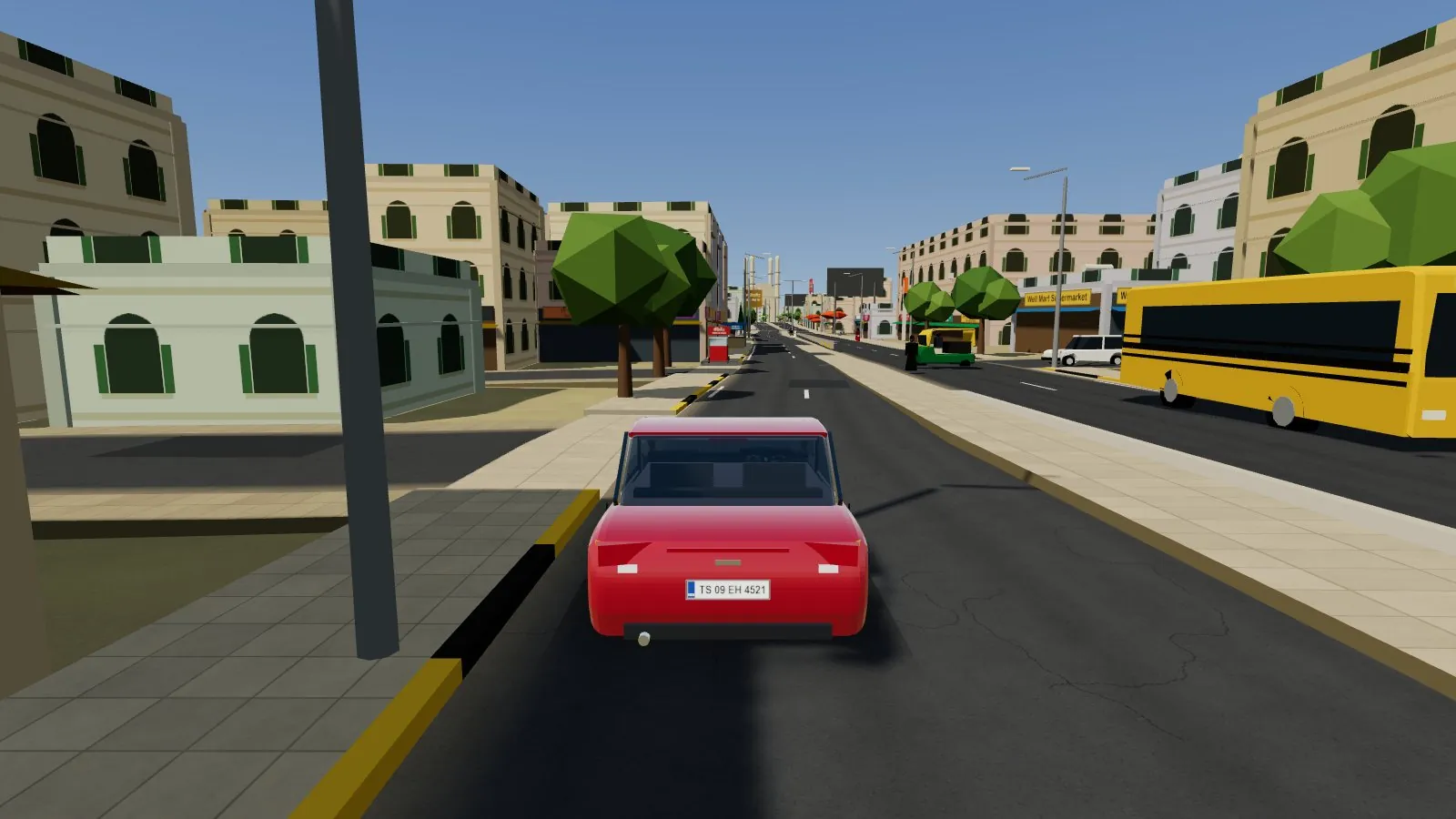
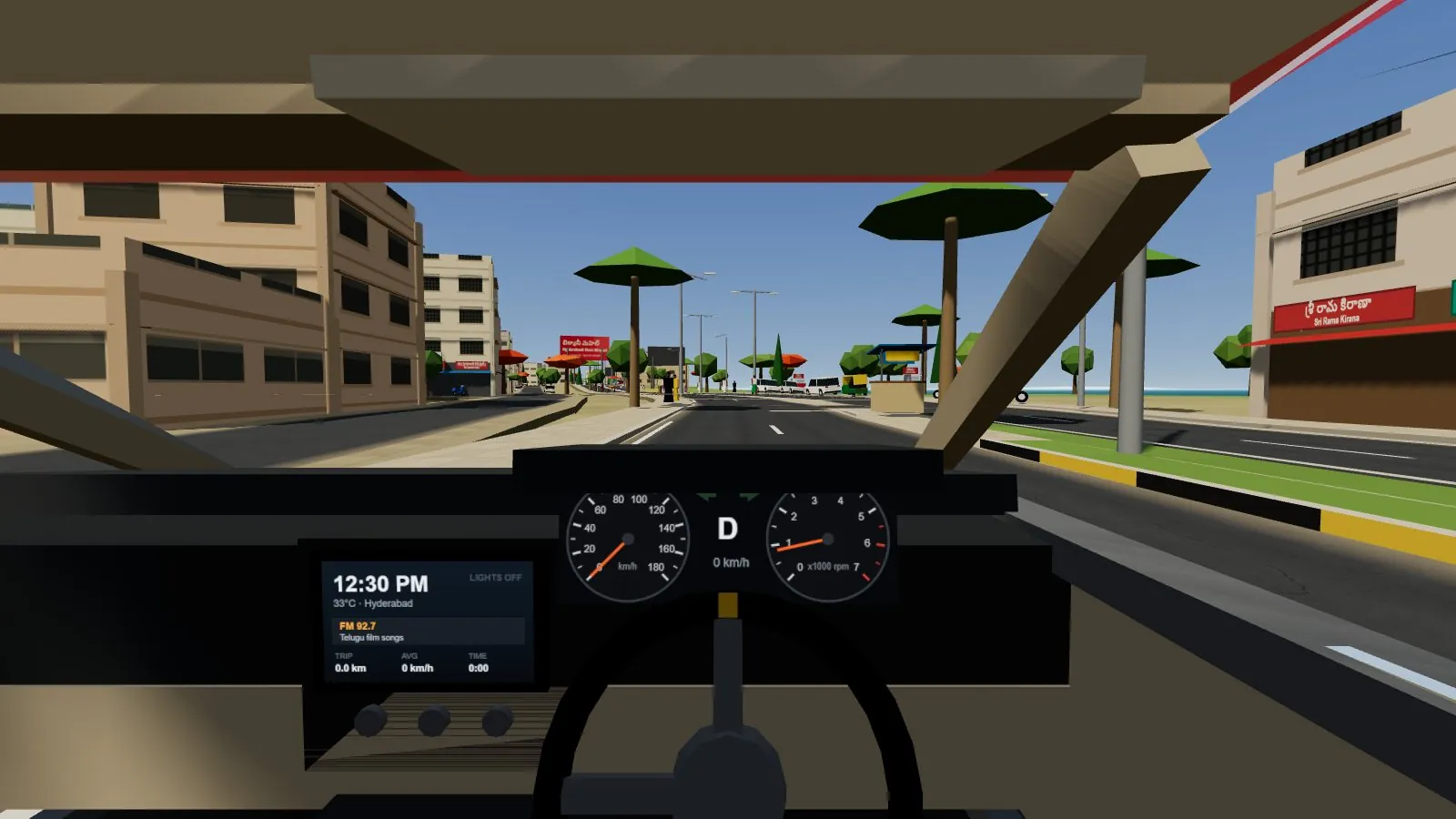
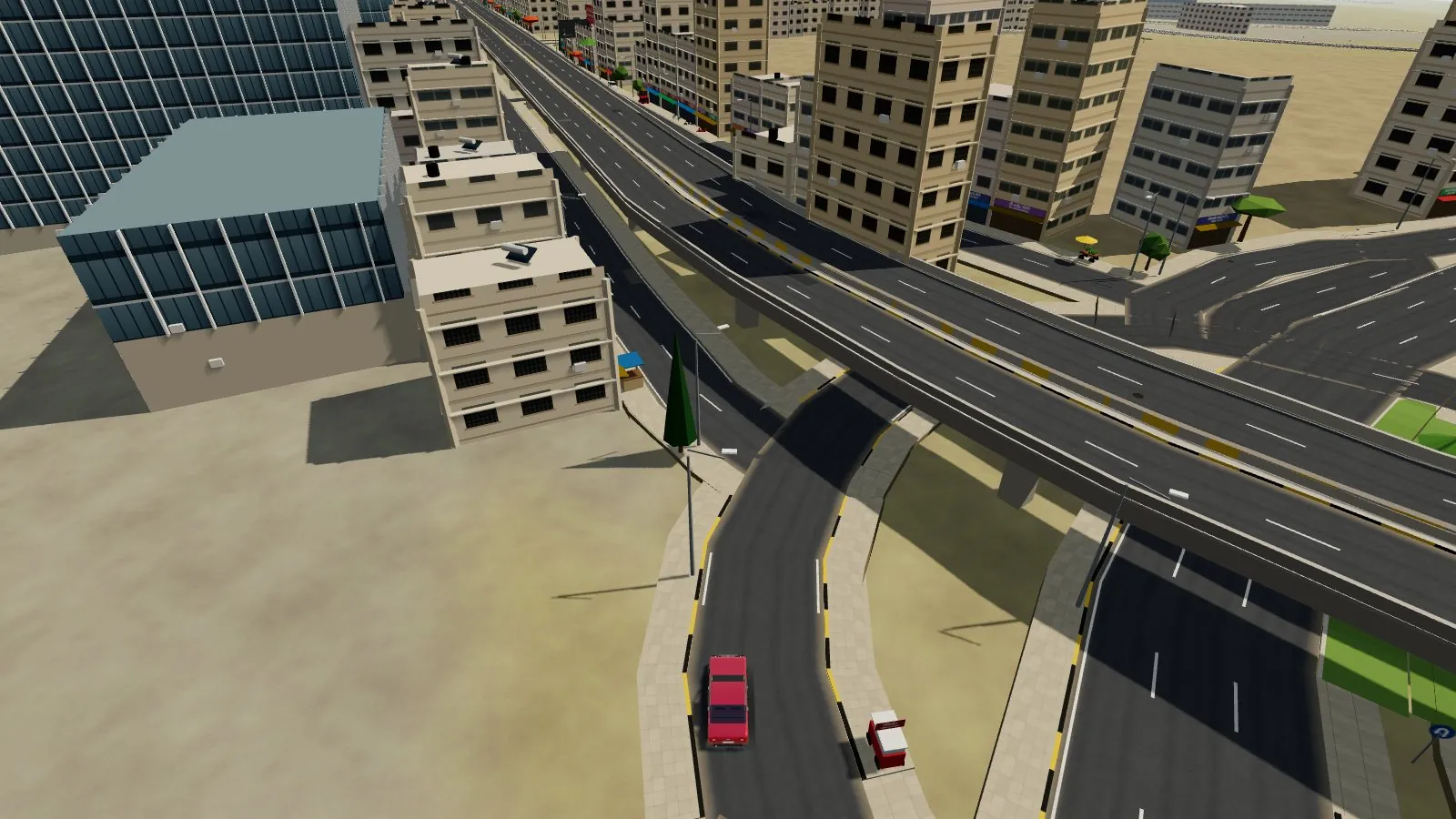
Sawari is a free browser driving simulator on five real Hyderabad routes, and it treats you as a car driver: you stay in your lane, signal, stop at the line and keep your distance from traffic. The car is an automatic. It runs on a phone held sideways with an on-screen steering wheel, a tablet, a laptop or a PC.
The debrief at the end lists every fault, such as no indicator before a turn, drifting right of the centre line, red lights and collisions, so you can see which rider habits are still with you. You can also send a friend a challenge to beat your score. It is practice only, and it cannot teach width judgement the way a real car and cones can. Try Banjara Hills Road No. 1 with busy traffic to practise patience at junctions.
Frequently asked questions
Is it easier to learn a car if you already ride a two-wheeler?
Partly. You already know the roads, the rules and how traffic behaves, which helps a lot. But some riding habits, such as filtering through gaps and changing direction quickly, have to be unlearnt because a car is much wider and slower to react.
How do I judge the width of a car?
Practise in an empty space with markers or cones, noting where the kerb and the lines sit in your view when the car is close to them. Over time you learn reference points on the bonnet and dashboard, and you stop drifting towards the kerb.
Why can't I filter through traffic in a car like on a bike?
A car is roughly two to three times as wide as a scooter, so gaps that suit a bike do not fit, and squeezing into them causes scrapes and blocks other lanes. In a car you stay in your lane and move with the queue.
Do I need a separate licence to drive a car if I have a two-wheeler licence?
Yes. A motorcycle licence does not cover cars. You need a light motor vehicle (LMV) class, which starts with a learner's licence for that class and a driving test in a car.
Free in your browser on a phone, tablet, laptop or desktop. No download, no sign-up.
Sawari is a practice simulator. It does not replace lessons with a licensed instructor or the official RTA test. Always follow the signs, signals and traffic police on the real road.