Indicators and lane discipline: how to signal and choose lanes in Indian traffic
How early to use your indicators, how to choose the right lane, why you overtake on the right and how to stop weaving: indicators and lane discipline explained.
Good indicators and lane discipline make you predictable, and in Hyderabad traffic predictable is safe. Signal early, before you brake or move, pick your lane well before the junction, overtake on the right and stay in your lane rather than weaving through gaps.
Why signalling matters so much in Indian traffic
An indicator is a message to everyone around you: the car behind, the scooter filtering up beside you, the pedestrian waiting to cross, the auto driver deciding whether to pull out. In dense traffic, nobody can read your mind, and nobody has much space to react.
It is easy to stop signalling because others do not. Do it anyway. The one rider who sees your indicator and holds back is the one you would otherwise have hit. Signalling also makes you think about your own plan a few seconds earlier, which tends to make the rest of the manoeuvre smoother.
An indicator does not give you the right to move. It tells people what you would like to do. You still have to check that the space is there and that others have seen you.
When and how early to indicate
The order: check, signal, then move
Use the same order every time:
- Check your mirrors and, for a lane change, look over your shoulder into the blind spot. Two-wheelers sit there constantly.
- Signal in good time, so people see it before you change speed or position.
- Position the car in the lane you need.
- Slow down for the turn, and check again just before you turn.
- Turn, and make sure the indicator goes off afterwards.
How early is early enough
In city traffic, aim to have the indicator on at least 30 metres before the turn, and more on faster roads. Signal before you start braking, so the driver behind knows why you are slowing. If you signal at the same moment you turn, the signal has told nobody anything.
Do not signal too early either. If there is a side road or a petrol pump entrance between you and your turn, wait until you have passed it, or someone may pull out thinking you are turning into it.
When to signal
- Every left and right turn, including into a gate or parking.
- Every lane change, including moving out round a parked bus.
- Pulling away from the kerb and pulling in to stop.
- Before a U-turn (right indicator), and at roundabouts as you approach and leave.
Hazard lights are for a stopped or broken-down vehicle, not for going straight through a junction or for driving in rain.
Choosing the right lane
On Hyderabad's wide arterials, such as the roads through HITEC City and up to Jubilee Hills, the lane you are in decides where you can go. Get it wrong and you either make a late, dangerous cut across or miss your turn.
The general pattern
- Left lane: turning left, the free left at a signal, slower vehicles, buses and autos stopping.
- Middle lanes: going straight on.
- Right lane: turning right, U-turns at the median, and overtaking.
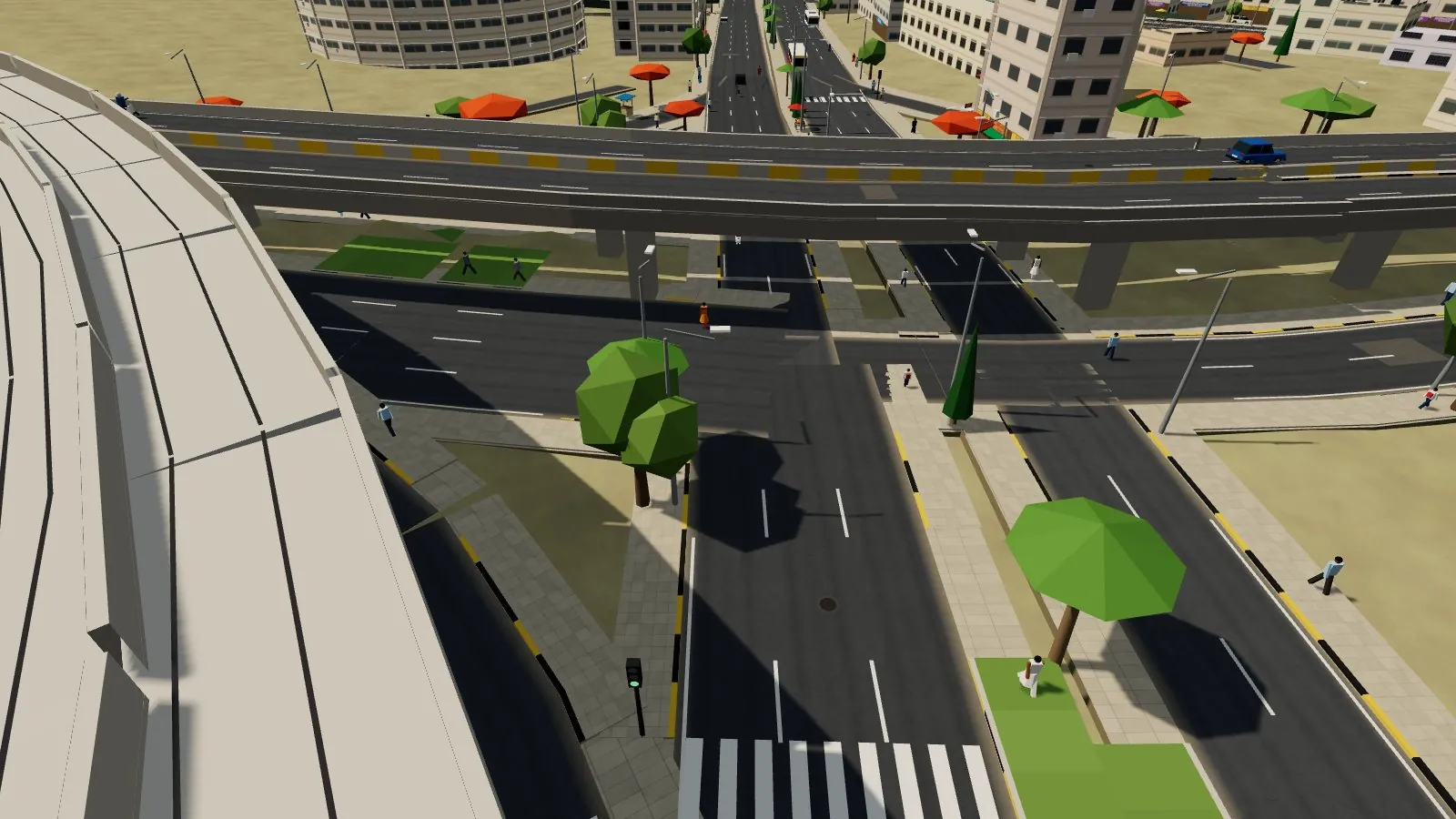
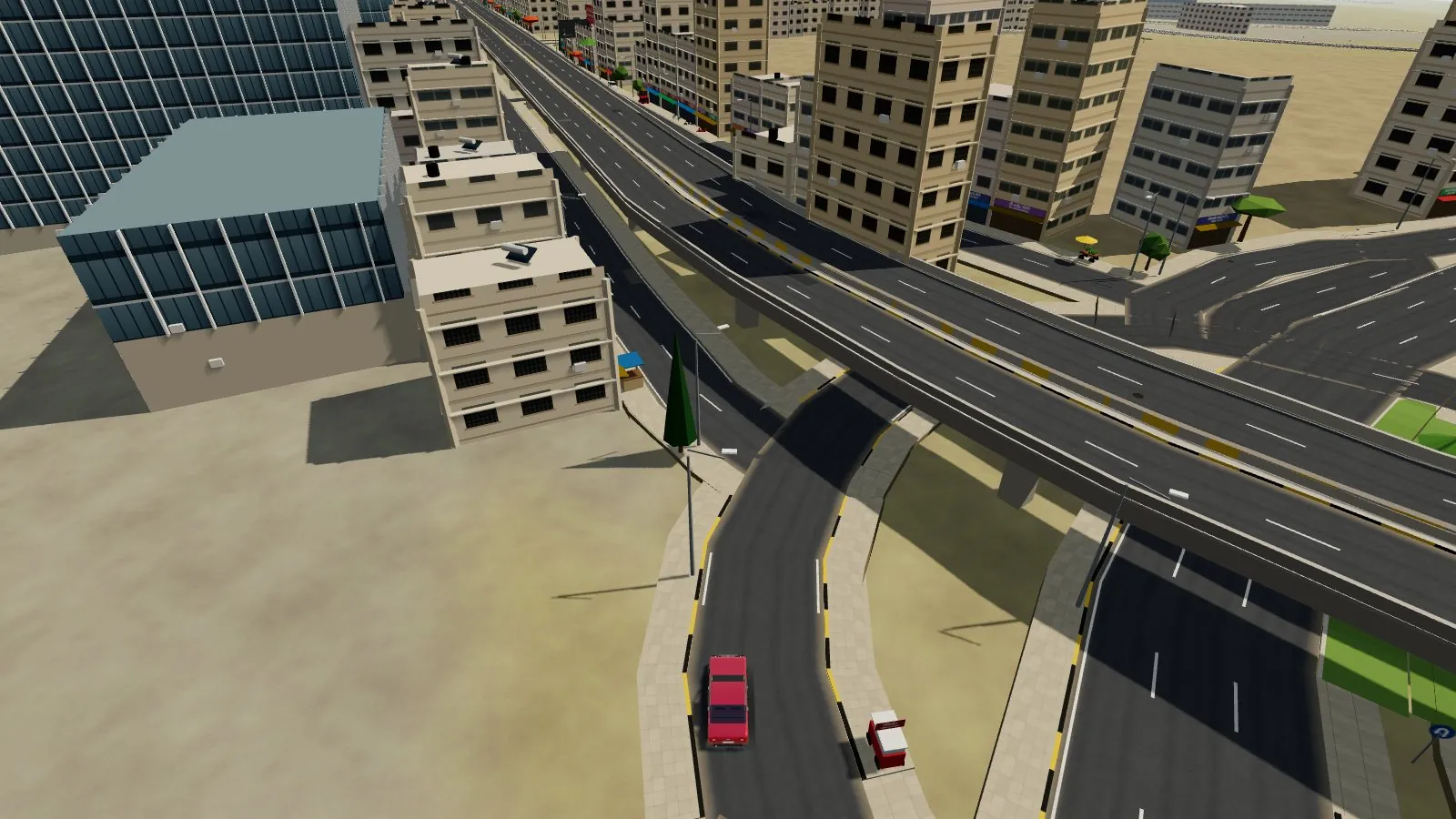
Always follow lane arrows painted on the road and overhead signs where they exist, because they override the general pattern. Near flyovers, lanes split between the ramp and the service road well before the junction. Our guide to driving on flyovers covers that in detail.
Plan two junctions ahead
If you know the route, move into the right lane a few hundred metres before you need it, while traffic still has gaps. If you are using navigation, listen for the instruction early. If you end up in the wrong lane, go where that lane goes and find a way back. A missed turn costs a few minutes. A last-second swerve across three lanes can cost far more.
Overtaking on the right
In India you overtake on the right. Before you pull out:
- Make sure you can see far enough ahead, and that there is no oncoming traffic on an undivided road.
- Check behind you: someone may already be overtaking you.
- Signal right, move out smoothly, pass with a good gap, then signal left and move back in only when you can see the vehicle you passed clearly behind you.
Do not overtake near junctions, on bends, on the approach to a zebra crossing, near a speed breaker or where a solid centre line forbids it. Never overtake a vehicle that has stopped at a crossing.
Passing on the left is the classic Hyderabad move, and it causes many crashes because nobody is looking for you there. The exception is when the vehicle ahead has signalled and moved out to turn right: then you can pass it on the left with care.
Stay in your lane, do not weave
In slow traffic, the lane next to you always seems to move faster. Usually it is an illusion, and changing lanes over and over gains seconds at most. Each change also puts you across someone else's path, often a two-wheeler you have not seen.
Some simple habits help:
- Keep the car centred in your lane, not straddling the line.
- Leave a gap of at least a couple of seconds to the vehicle in front, so you are not forced to swerve when it brakes.
- When a bus pulls into a stop ahead, slow down early rather than diving into the next lane at the last moment.
- Let merging traffic in, one at a time. Zip merging works only if people take turns.
- If someone cuts in front of you, ease off and let them go. Arguing with your horn will not get you there faster.
Expect scooters and motorbikes to filter between lanes. You cannot control that, but you can make yourself predictable for them: steady speed, steady lane, clear signals. Our post on sharing the road with autos, buses and two-wheelers has more on reading their moves.
Practising signals and lanes in Sawari
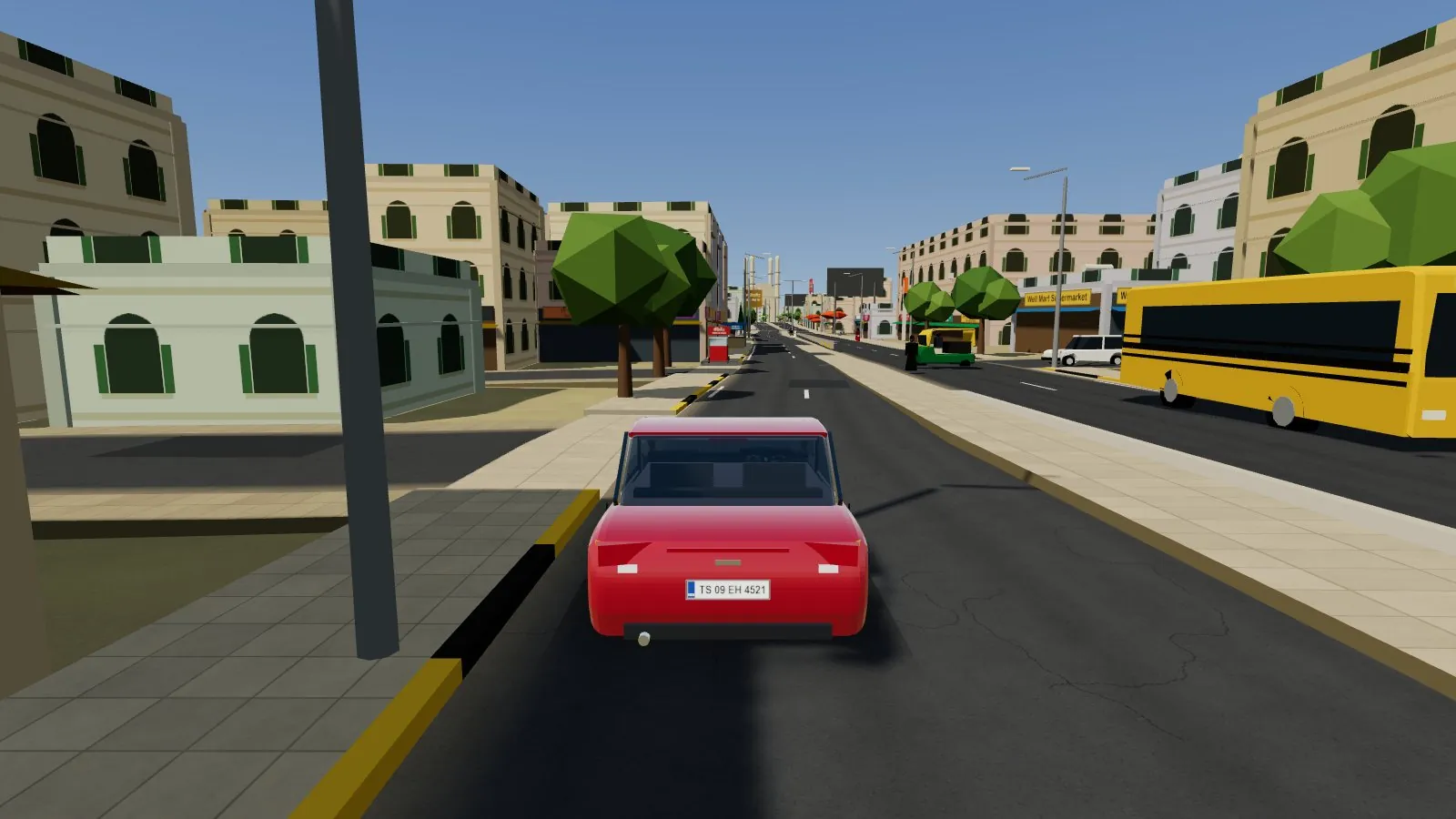
Sawari, the free browser driving simulator on real Hyderabad roads, checks your indicators on every route turn. Press Q for the left indicator and E for the right. Like a real car, the indicator cancels itself after the turn, so you only need to remember to switch it on.
The game expects the indicator to be on well before the turn: if it was not on in the approach, the debrief records "No indicator before a turn" with the advice to signal at least 30 m before you turn. U-turns count as right turns. Gentle bends that only bear left or right are not checked, just as you would not normally signal to follow the road round a curve.
Lane discipline is checked too. The blue route band shows your lane; drift right of the centre line on a two-way road and you get a fault for driving on the wrong side, and going against a one-way road is a fault of its own. Collisions are logged with what you hit, which is a good prompt to leave more space.
The best route for this is Cyber Towers to Jubilee Hills, with ten turns, flyover ramps and merging traffic at Inorbit Mall. Start it here, set traffic to Busy or Dense, and drive it in the driver's seat (press C). The game has no mirrors, so drag the mouse to look over your shoulder, the same way you would turn your head. If you leave the route, press R to return to it. Then read the debrief and work on the faults it lists, one at a time.
For the rules behind all this, see our guide to Hyderabad traffic rules.
Frequently asked questions
How far before a turn should I use my indicator?
Early enough that people behind and around you can react: at least 30 metres in slow city traffic, and more at higher speeds. Signal before you brake and before you move across.
Is it legal to overtake from the left in India?
The rule is to overtake on the right. Passing on the left is only acceptable when the vehicle ahead has signalled and moved to turn right, or when lanes of slow traffic are simply moving at different speeds.
Should I indicate when changing lanes on a straight road?
Yes. Every lane change needs a check over your shoulder and an indicator first, even when the road looks empty. Two-wheelers appear in gaps very quickly.
Why does my indicator switch off by itself?
Most cars cancel the indicator when the steering wheel straightens after a turn. A small lane change may not turn the wheel far enough, so check that it has gone off.
Free in your browser on a phone, tablet, laptop or desktop. No download, no sign-up.
Sawari is a practice simulator. It does not replace lessons with a licensed instructor or the official RTA test. Always follow the signs, signals and traffic police on the real road.