Road signs in India explained for the learner's licence test
Road signs in India explained for the learner's licence test: mandatory, cautionary and informatory signs, road markings and hand signals, with LL test tips.
Road signs in India fall into three families, and you can tell them apart by shape and colour before you can read a word: red circles give orders, red triangles give warnings, and blue rectangles give information. Learn the families first, then the individual signs, and the learner's licence test becomes much easier.
The signs used across India follow the same national system, so what you learn for the test in Hyderabad applies anywhere in the country. This guide covers the families, the signs that come up most often, road markings and hand signals. For official practice questions, use the learner's licence practice test on Parivahan Sarathi.
Mandatory signs: the red circles
Mandatory signs, also called regulatory signs, are instructions. Ignoring one is an offence. Most are circular.
Prohibitory signs
A circle with a red border, usually on a white background, tells you something is not allowed. Where there is a red diagonal bar across a symbol, it is forbidden. Common examples:
- No entry: a red circle with a white horizontal bar. You must not drive in from your side.
- One way signs, which work with no entry signs to show the permitted direction.
- No overtaking, no U-turn, no left turn and no right turn.
- No parking and no stopping or standing, which have a blue background with red border and bars.
- Horn prohibited, often near hospitals and schools.
- Speed limit: a number in a red circle is the maximum speed in kilometres per hour.
- Limits on width, height, length and weight, shown as a number with a symbol.
Compulsory signs
A solid blue circle with a white symbol tells you what you must do: compulsory turn left, compulsory ahead, keep left, compulsory cycle track, and so on. A common LL test trap is mixing up "no left turn" (red border, bar across the arrow) with "compulsory turn left" (blue circle, white arrow).
Two signs with their own shapes
The STOP sign is a red octagon. It means stop completely at the line, look, and only go when the way is clear. Slowing down is not enough.
The GIVE WAY sign is a triangle pointing downwards with a red border. It means let traffic on the main road go first, and stop if you need to.
These two have unique shapes on purpose: you can recognise them from behind, or covered in dust, or in the dark.
Cautionary signs: the red triangles
Cautionary or warning signs are triangles pointing upwards, with a red border, a white background and a black symbol. They do not order you to do anything specific; they tell you a hazard is coming so you can slow down and get ready. Examples you will see in Hyderabad and in the test:
- Bends: left, right, hairpin and a series of bends.
- Junctions: crossroads, T-junction, Y-junction, side road on the left or right, and roundabout ahead.
- Narrow road or narrow bridge ahead.
- Pedestrian crossing, school ahead and men at work.
- Steep ascent and steep descent.
- Slippery road, loose gravel and falling rocks.
- Speed breaker or hump ahead.
- Cattle and animals crossing.
- Level crossing, guarded or unguarded.
Speed breakers deserve a special mention for Hyderabad drivers: they are everywhere, not always signed, and often painted with yellow and black stripes. Our post on speed breakers and speed limits covers how to approach them.
Informatory signs: the blue rectangles
Informatory signs are rectangles, usually blue, sometimes green on highways. They help rather than instruct. Examples:
- Direction and place signs, showing which lane or turn leads where.
- Parking: a white P on blue.
- Hospital, first aid post, fuel station, eating place and rest area.
- No through road and U-turn signs at median openings.
A useful rule for the test: if a sign is rectangular and blue, it is almost always information. If it is circular, it is an order. If it is a triangle pointing up, it is a warning.
Road markings
Paint on the road is as much a part of the rules as signs on poles, and the LL test asks about it.
- Broken white centre line: you may cross it to overtake or turn when it is safe.
- Continuous centre line: do not cross it to overtake.
- Double continuous lines: never cross them.
- Lane lines: broken lines divide lanes going the same way. Stay within your lane and indicate before you change.
- Stop line: a solid line across your lane at a junction or signal. Stop behind it, not on it.
- Zebra crossing: black and white stripes where pedestrians cross. Slow down, and stop for people waiting or crossing.
- Arrows painted in a lane show the directions that lane is for. Get into the right lane early.
India drives on the left, so on a two-way road you keep left of the centre line. On a dual carriageway with a median, you use the lanes on the left of the median and overtake on the right.
Signals, hand signals and the traffic police
Traffic lights
Red means stop behind the line. Amber means stop, unless you are so close that stopping would be unsafe. Green means go if the way is clear, still giving way to pedestrians who are already crossing. A green arrow lets you go only in the direction it shows. A flashing amber means proceed with caution.
Driver hand signals
The test sometimes asks about the hand signals drivers use, mostly for when indicators fail. With your right arm out of the window:
- Arm stretched straight out: I am turning right.
- Arm rotated in an anticlockwise circle: I am turning left.
- Arm stretched out, palm down, moved up and down: I am slowing down.
- Arm raised straight up: I am stopping.
Traffic police
A traffic police officer's directions override signals and signs. In broad terms, a raised hand with the palm towards you means stop, and a beckoning wave means come on. Watch the officer, not the light, when someone is directing traffic. The Hyderabad Traffic Police publish guidance and notices for the city.
How signs appear on the LL test
The learner's licence test is computer-based. Sign questions usually show a picture and ask what it means, or describe a situation and ask which sign applies. A few tips:
- Read every option. Wrong answers are often close: "no parking" against "no stopping", "no left turn" against "compulsory turn left".
- Use shape and colour to rule out options before you look at the symbol.
- Do the official practice test on Sarathi several times; it uses the real style of question.
- Learn the rules alongside the signs: right of way, giving way to emergency vehicles, and what to do at an uncontrolled junction.
Our step-by-step guide to getting a driving licence in Hyderabad explains where the LL test fits in the whole process.
Seeing signs in context
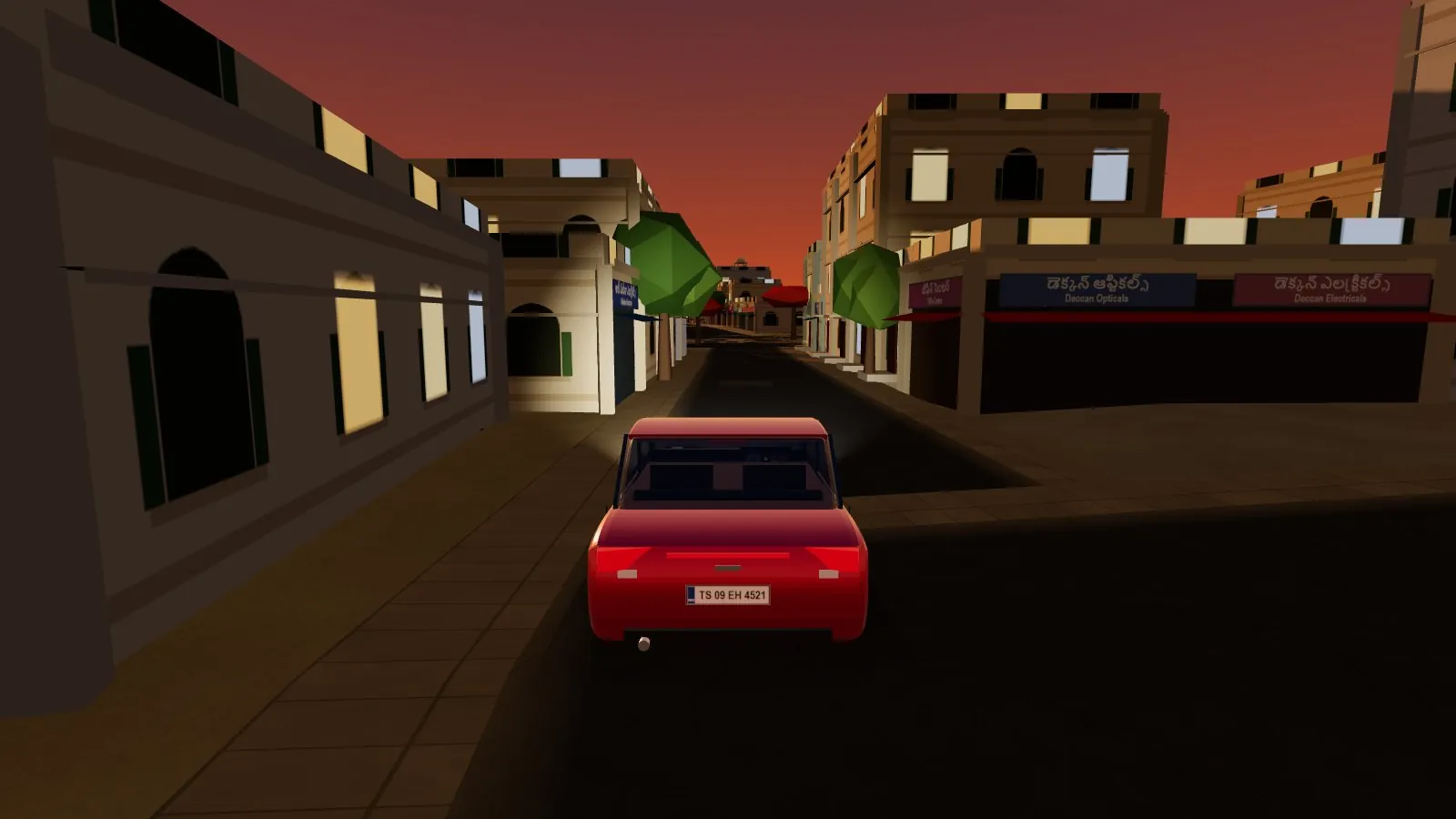
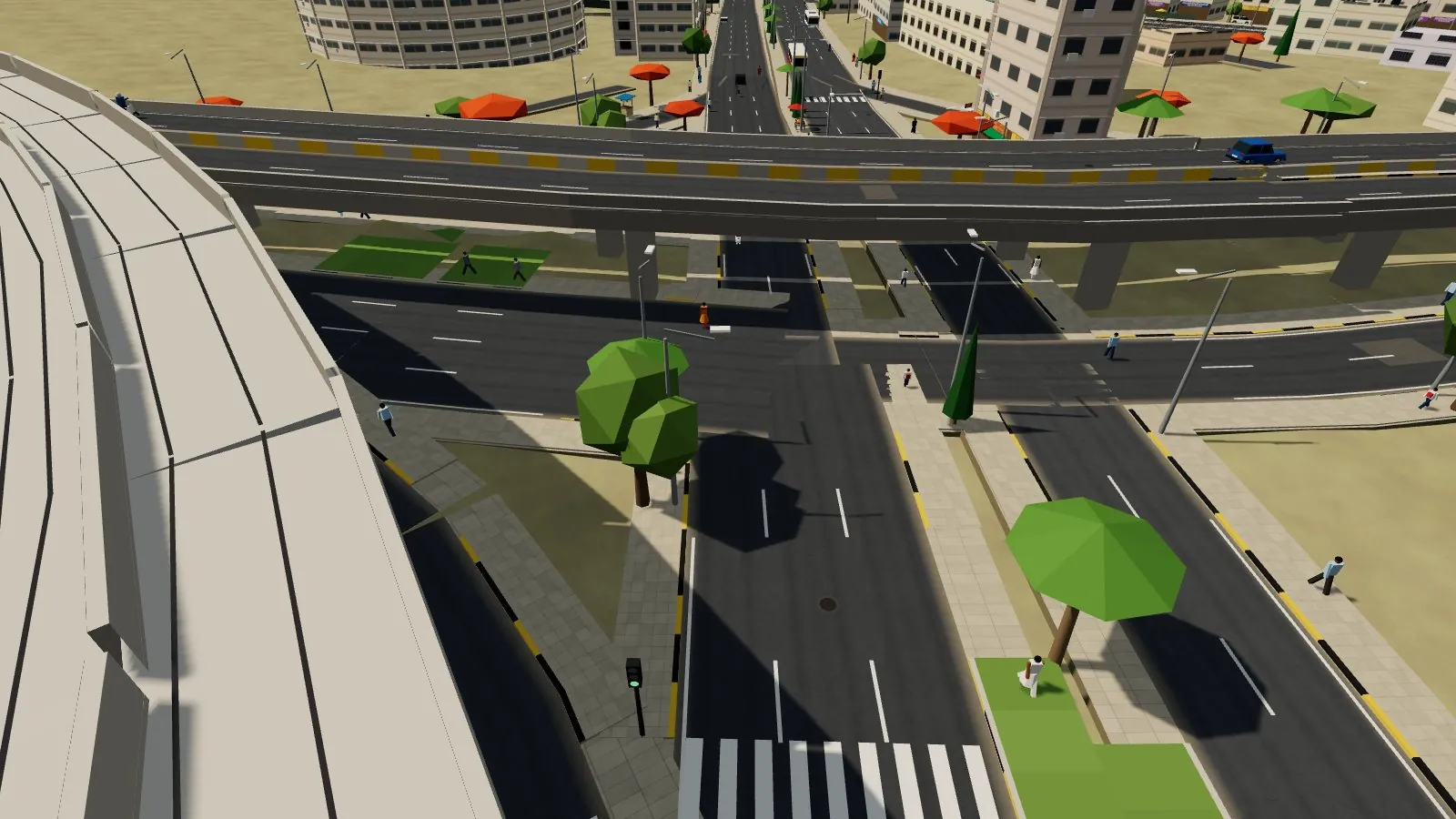
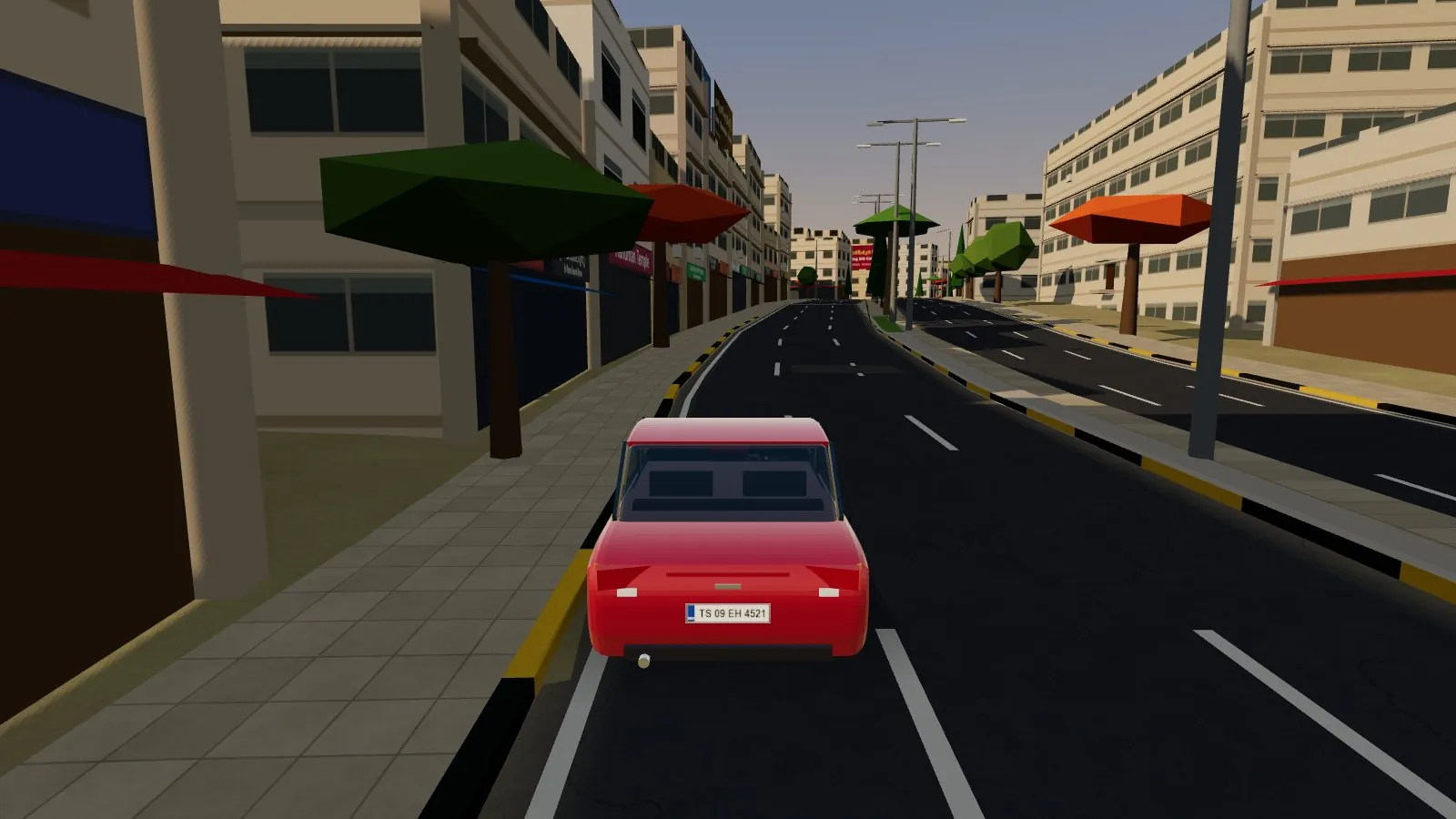
Signs make more sense when you see them on a real road. In Sawari, a free browser simulator on real Hyderabad routes, you drive through signals with stop lines and zebra crossings, over striped speed breakers and past U-turn signs at median openings, with the current speed limit shown on the dashboard. The debrief tells you when you ran a red or went over the limit. It is a practice aid only, not an official resource, and it does not cover every sign in the question bank. For the test itself, the official practice questions are what count.
Frequently asked questions
What are the three types of road signs in India?
Mandatory (or regulatory) signs, which you must obey; cautionary (warning) signs, which tell you about a hazard ahead; and informatory signs, which give directions and information.
What shape are mandatory road signs in India?
Most are circles. A red-bordered circle usually forbids something, such as no entry or no overtaking, while a blue circle tells you what you must do, such as compulsory turn left. The STOP sign is a red octagon and the GIVE WAY sign is a downward-pointing triangle.
Are road signs part of the learner's licence test?
Yes. The learner's licence test includes questions on traffic signs as well as rules of the road. Learning the shapes and colours of each family of signs makes most questions straightforward.
What does a solid white line in the middle of the road mean?
A continuous centre line means you should not cross it to overtake. A broken line may be crossed when it is safe to do so. Double continuous lines must never be crossed.
Sawari is a practice simulator. It does not replace lessons with a licensed instructor or the official RTA test. Always follow the signs, signals and traffic police on the real road.