How to drive at roundabouts in India: give way, go clockwise, signal your exit
How to drive at roundabouts in India: go clockwise, give way to traffic already on it from your right, pick a lane for your exit and signal left as you leave.
To drive at roundabouts in India, remember three things: go round clockwise, give way to traffic already on the roundabout, which comes from your right, and signal left as you leave. The rest is choosing the right lane and keeping an eye on the two-wheelers that cut inside you.
How a roundabout works in left-hand traffic
A roundabout, often called a rotary or a circle in India, is a junction where every vehicle travels round a central island in the same direction. Because India drives on the left, that direction is clockwise: you turn left onto the roundabout and the island stays on your right the whole way round.
A roundabout replaces the question "who goes first across the junction?" with a simpler one: "is there a gap?" Everyone flows the same way, at low speed, and nobody has to cross oncoming traffic. That is why roundabouts work well, provided drivers follow the same few rules.
In India you will meet everything from a small painted circle in a colony to large rotaries around a statue or monument. Some busy ones are controlled by signals or by traffic police at peak hours. When they are, follow the lights or the officer, not the general rules below.
Approaching and giving way
Slow down early
Look for the roundabout sign and the road markings, and slow down well before the entry. Pick your lane on the approach (see the next section) and signal if you need to.
Give way to the right
As you reach the entry, look right. Traffic already on the roundabout, coming from your right, has priority. Wait for a gap that lets you join without making anyone brake. Look left too, because pedestrians often cross at the entry and exit, and riders sometimes come the wrong way round the edge.
Do not stop on the roundabout itself to let people in, unless traffic is at a standstill. A driver who stops unexpectedly on the circle confuses everyone behind them.
Join smoothly
Once there is a gap, go. Hesitating at the line and then lunging into a smaller gap is how most roundabout bumps happen. If you are unsure, wait for the next one.
Choosing a lane and signalling
Think of the roundabout as a clock face, with you arriving at six o'clock. Your exit decides your lane and your signal.
| Where you are going | Approach lane | Signal |
|---|---|---|
| First exit (left, about nine o'clock) | Left lane | Left on the approach, and keep it on as you leave |
| Straight on (about twelve o'clock) | Left lane, or as marked | No signal on the approach; left after you pass the exit before yours |
| Right (about three o'clock) or full circle | Right lane | Right on the approach; left after you pass the exit before yours |
Lane arrows painted on the approach override this pattern, so follow them where they exist. On a single-lane roundabout, which is common in India, there is only one lane to choose: the signals still matter.
Going round
If you are going right or all the way round, keep to the inside, near the island, until you are nearly at your exit. Then check left, signal left and move out towards the exit. Do not cut straight across the outer lane, because a vehicle may be there.
Leaving
Signal left just after you pass the exit before yours. That tells drivers waiting at your exit that you are leaving, so they can join safely, and tells the driver behind what you are doing. Leave in the lane that lines up with your exit, and watch for pedestrians crossing the road you are entering.
What makes Indian roundabouts tricky
The rules above are the textbook. On the road, you will need a few more habits.
- Two-wheelers take the inside line. Scooters and motorbikes often go round close to the island regardless of their exit and then cut across to leave. Before you move left to exit, check your left side and blind spot.
- Not everyone gives way. Some drivers treat the roundabout as "first to the gap" rather than giving way to the right. Be ready for it, and do not insist on your priority.
- Buses and lorries need room. Large vehicles take up more than one lane on a tight circle. Do not drive alongside them on the roundabout.
- Autos stop anywhere. Shared autos pick up and drop passengers at roundabout exits. Expect a stopped auto just after you leave.
- Pedestrians cross at the edges. Busy market roundabouts have people walking across the entries and exits, and sometimes over the circle itself. Keep your speed low.
The Charminar as an example
The road round the Charminar in Hyderabad's Old City is a good example of a roundabout that is never quite textbook. The monument sits in the middle of four roads, and traffic runs round it with the Charminar on its right. Around it you have shops, stalls, parked two-wheelers, autos, handcarts and a lot of people on foot.
Here the general rules still apply, but slowly: walking speed is often right. Give way to traffic already circling, keep a steady line close to the island if you are going more than halfway round, and signal left in good time before your exit. Expect pedestrians to cross between vehicles, and two-wheelers to appear on both sides of you.
In real life, vehicle access around the Charminar has been restricted as the area has been made more pedestrian-friendly, so the roads open to traffic and the times they are open can change. Follow the signs and the traffic police on the day. For more on the area, read our Charminar and Old City driving guide.
Practising roundabouts in Sawari
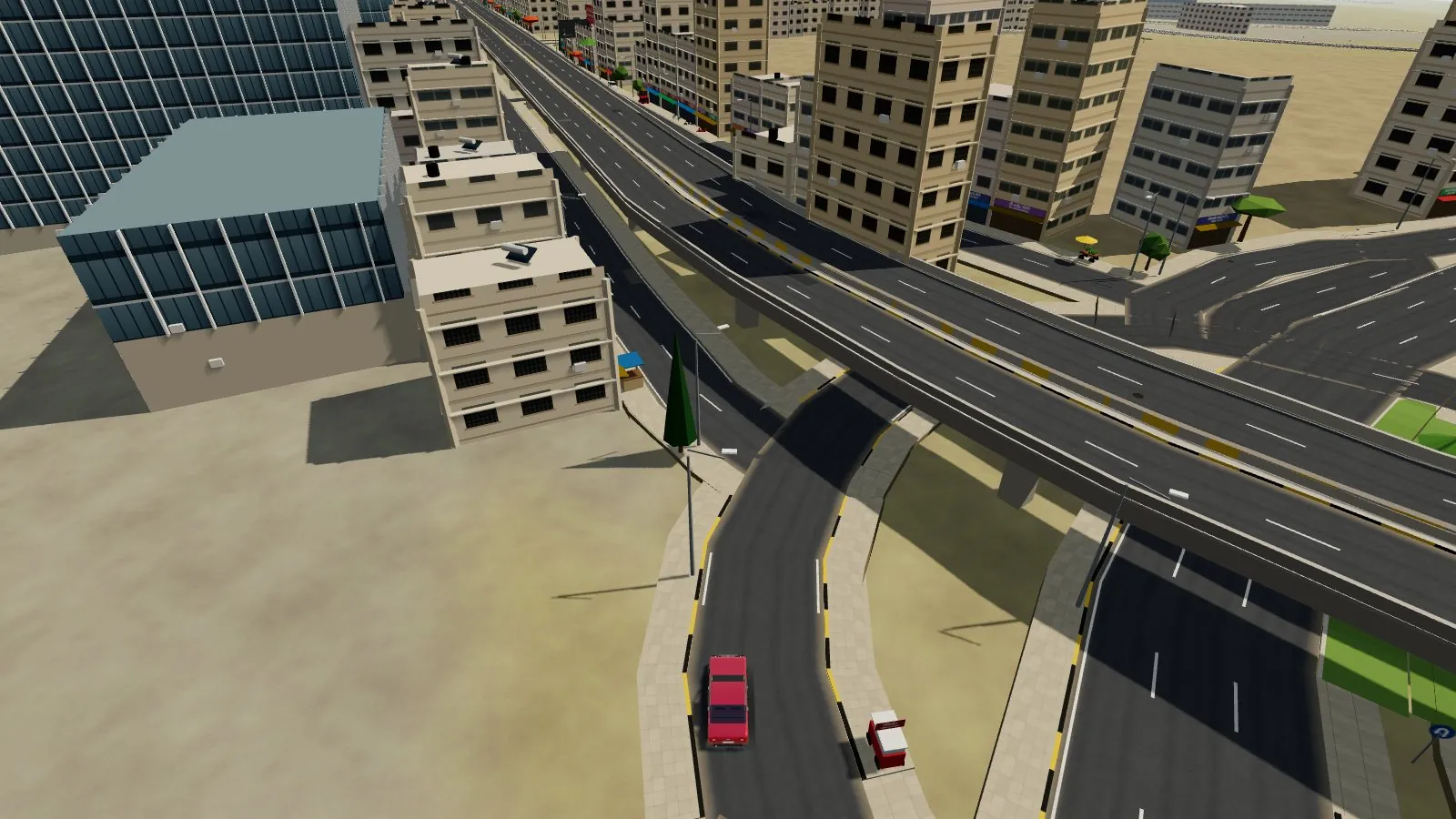
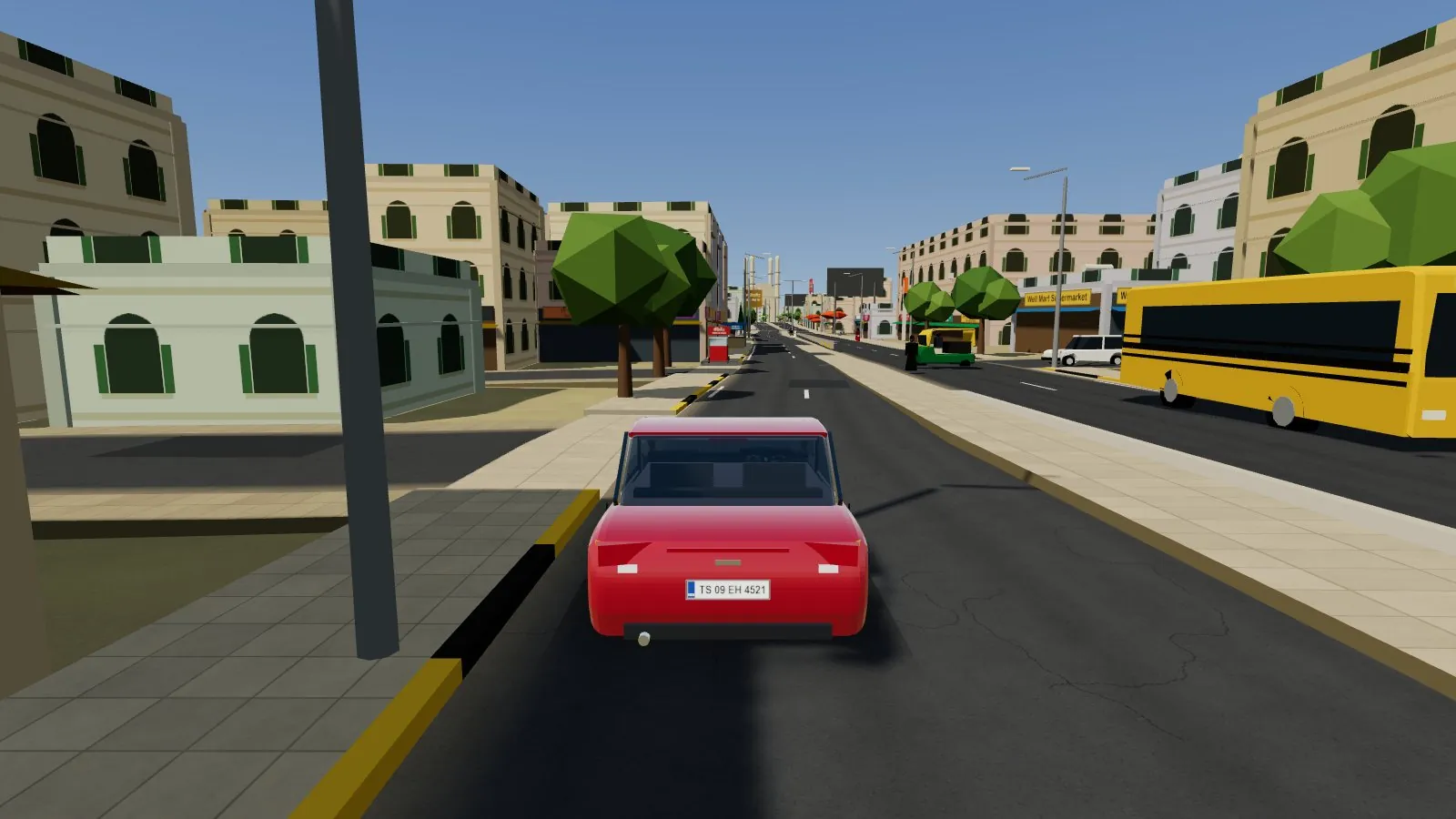
Sawari is a free browser driving simulator on real Hyderabad streets, and its hardest route, Charminar and Pathergatti, takes you up Charminar Road, round the Charminar itself and north along Pathergatti Road. It is 2.1 km long with nine turns, tight streets, stalls and autos close to the kerb, and parked two-wheelers.
- Follow the blue band round the monument. It shows the legal direction of travel, and going against a one-way road is logged as a fault.
- Signal your exit. Press Q for left and E for right before the turns on the route. The indicator cancels itself after the turn, and if you forget, the debrief records it with the advice to signal at least 30 m before turning.
- Keep it slow. Collisions with vehicles, pedestrians, walls and buildings are all logged. So is leaving the road, which happens quickly on a tight circle.
- Look before you go. Use the driver's seat view (C) and drag the mouse to look right before you join, the way you would turn your head. The game has no mirrors.
Start with traffic on Light or Normal, then work up to Dense. If you leave the route, press R to return to it. Drive the Charminar route here, and when you are done, read the debrief: every fault comes with advice. For more on signalling, see our guide to indicators and lane discipline.
Frequently asked questions
Which way do you go round a roundabout in India?
Clockwise. India drives on the left, so you turn left onto the roundabout and travel round it clockwise, keeping the central island on your right.
Who has right of way at a roundabout?
Traffic already on the roundabout. As you arrive, give way to vehicles coming from your right, and join only when there is a safe gap.
Do I need to indicate at a roundabout?
Yes. Signal left as you approach if you are taking the first exit, signal right if you are going more than halfway round, and signal left just after you pass the exit before the one you want.
What should I do if a roundabout has traffic lights or a police officer?
Follow the lights or the officer. They override the usual give-way rule, and many busy Indian rotaries are controlled this way at peak hours.
Free in your browser on a phone, tablet, laptop or desktop. No download, no sign-up.
Sawari is a practice simulator. It does not replace lessons with a licensed instructor or the official RTA test. Always follow the signs, signals and traffic police on the real road.