Night driving in Hyderabad: headlights, high beam and staying alert after dark
Night driving tips for Hyderabad: using headlights and high beam properly, spotting unlit vehicles and pedestrians, handling fatigue and drink-driving checks.
Night driving in Hyderabad is calmer in some ways, with less traffic, and harder in others: you see less, others see you less, and people are tired. Most of it comes down to good use of your headlights, lower speed and a careful eye for anything without lights.
Why night driving is different
In daylight you see the whole road at once. At night you see what your headlights and the street lamps show you, and everything else is guesswork. Distances are harder to judge, dark objects disappear against dark roads, and the glare of oncoming lights can blind you for a moment.
Traffic changes too. Main roads empty out, so speeds go up. Lorries and goods vehicles that cannot enter parts of the city in the day are often on the roads at night. And late in the evening you share the road with people heading home from work, from weddings and from parties, some of whom have been drinking.
Headlights: low beam, high beam and when to use each
Switch on early
Put your headlights on at dusk, not when it is fully dark. The point is not only for you to see, but for others to see you. A grey car in the evening light is very hard to pick out.
Low beam in the city
On lit city roads, low beam is right almost everywhere. It lights the road ahead without dazzling people coming the other way or the driver in front, who sees your lights in the mirror.
High beam etiquette
High beam is useful on dark roads with nobody around: an unlit stretch on the edge of the city, a highway at night. The rules of courtesy are simple:
- Dip to low beam as soon as you see an oncoming vehicle.
- Dip when you come up behind another vehicle, even a two-wheeler.
- Do not use high beam on lit city roads at all.
- A quick flash is a way to warn someone or signal at a blind bend, not a weapon.
When you are dazzled
If an oncoming vehicle has its high beam on, slow down, look at the left edge of your lane rather than into the lights, and hold your line. Flashing back only blinds both of you. If you are dazzled badly, slow right down until your eyes recover.
Keep your glass and lights clean
Dust on the windscreen scatters light from oncoming headlights and makes glare much worse. Clean the windscreen inside and out, and keep your headlight lenses clean. Check that both headlights, the tail lights and the brake lights work.
Things you cannot see: unlit vehicles and people
The biggest night danger in the city is something with no lights at all.
- Unlit vehicles. Bicycles, handcarts, some autos and two-wheelers with failed lamps, and lorries parked at the edge of the road without any reflectors or hazard lights. A dark lorry parked on a dark road is one of the hardest things to see.
- Pedestrians. People in dark clothes walking in the road where the footpath is broken or blocked, and people crossing between lamp posts, in the darker gaps.
- Wrong-way riders. At night, a single headlight coming towards you on your side of the road could be a two-wheeler riding the wrong way along the edge.
- Animals. Stray dogs and sometimes cattle lie on or beside the road, especially on quieter stretches.
- Road hazards. Unpainted speed breakers, potholes, diversions and dug-up road for works are all harder to see at night. Our guide to speed breakers and speed limits covers the clues to look for.
The defence for all of these is the same: drive at a speed that lets you stop within the distance you can see. If your lights show you only a short stretch of road, that speed is lower than you think.
Fatigue
Tiredness slows your reactions in the same way alcohol does, and it creeps up on you. Warning signs include heavy eyes, yawning, drifting in your lane, missing a turn or not remembering the last stretch of road.
- Do not start a long night drive after a long day if you can avoid it.
- On a long drive, take regular breaks, get out of the car and walk around.
- If you feel sleepy, stop somewhere safe and rest. Cold air, loud music and talking only buy a few minutes.
- A passenger who stays awake and talks to you helps, but is not a substitute for rest.
Drink-driving checks
Hyderabad Traffic Police regularly run drink-driving checks at night, especially on weekends, with officers stopping vehicles and using breath analysers. Drink-driving is a serious offence under the Motor Vehicles Act, and the penalties can include fines, prison and losing your licence. The simplest rule is not to drink at all if you are driving. Book a cab, use a driver or let a sober friend take the wheel.
If you are stopped at a check, pull over where the officers direct you, keep your licence and documents ready and follow instructions calmly. For current rules, see the Hyderabad Traffic Police.
Practising night driving in Sawari
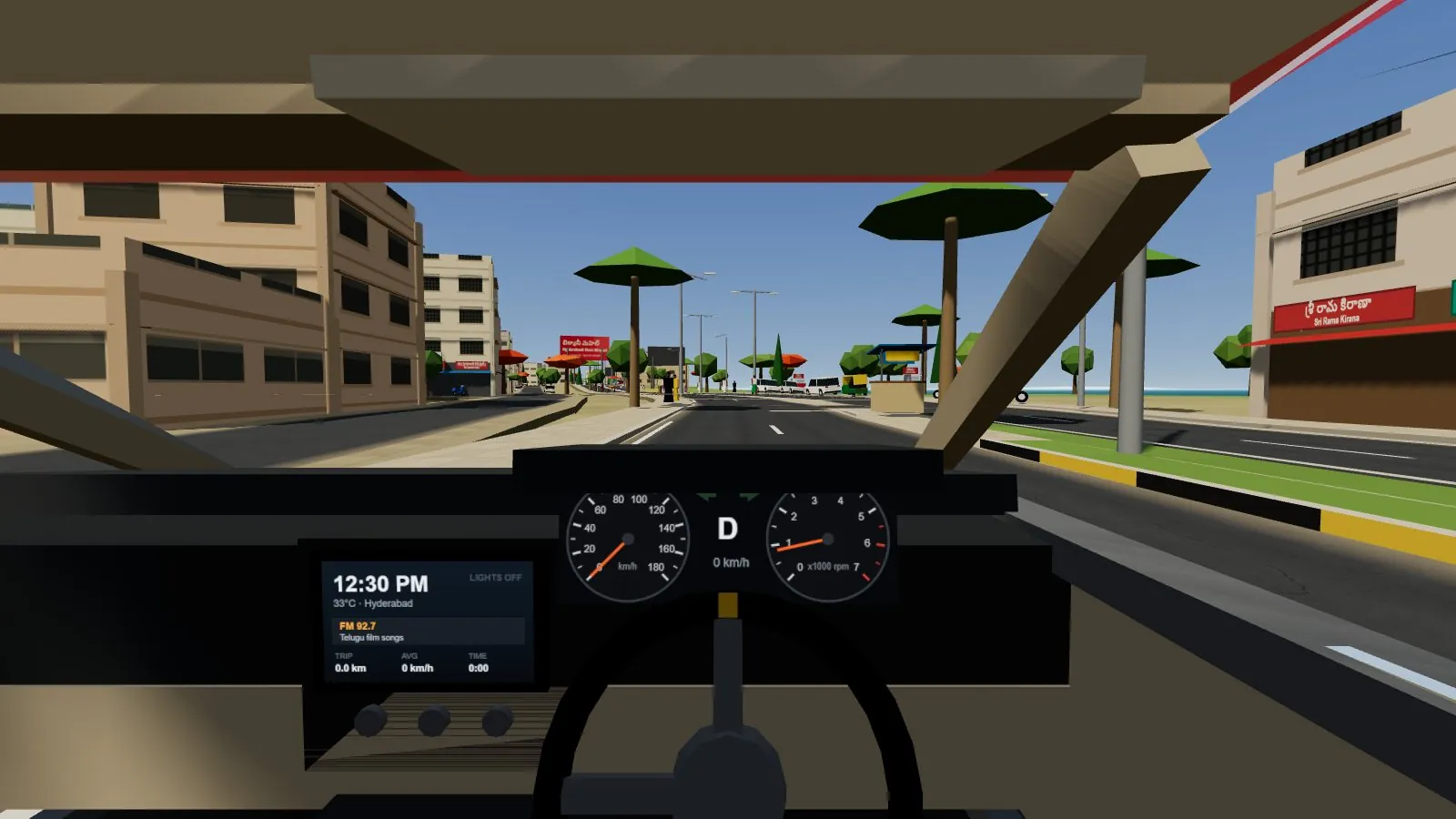
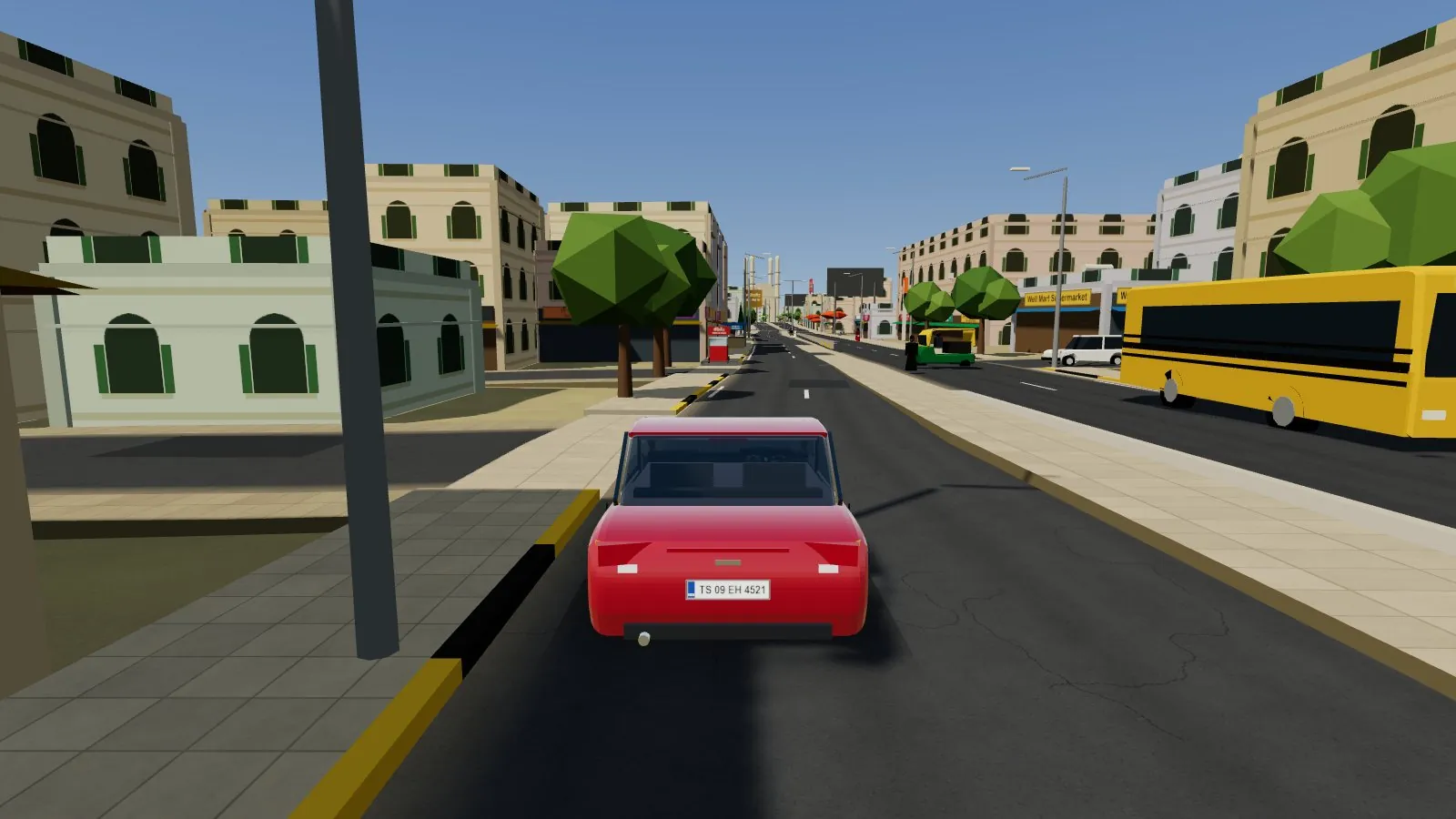
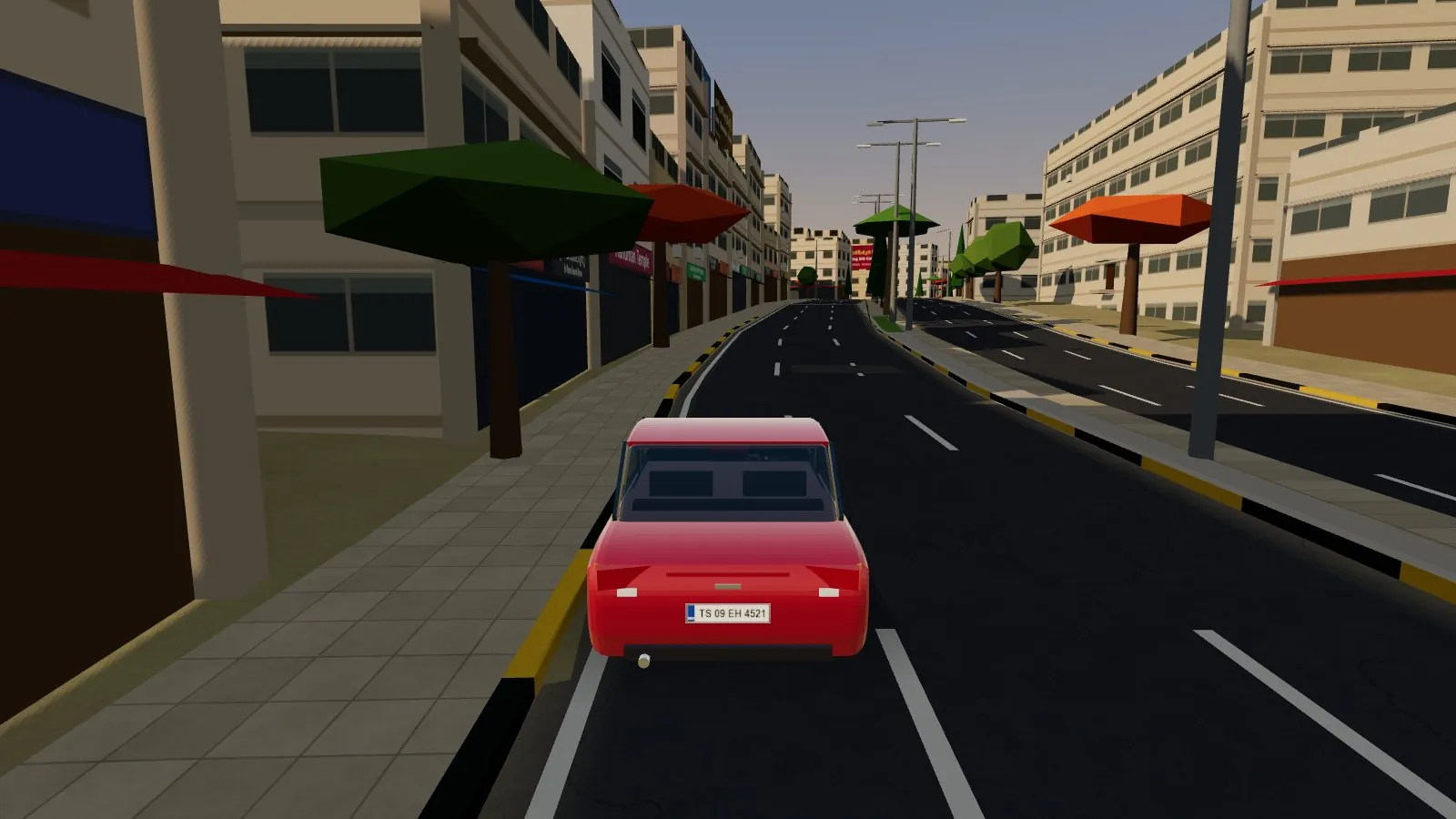
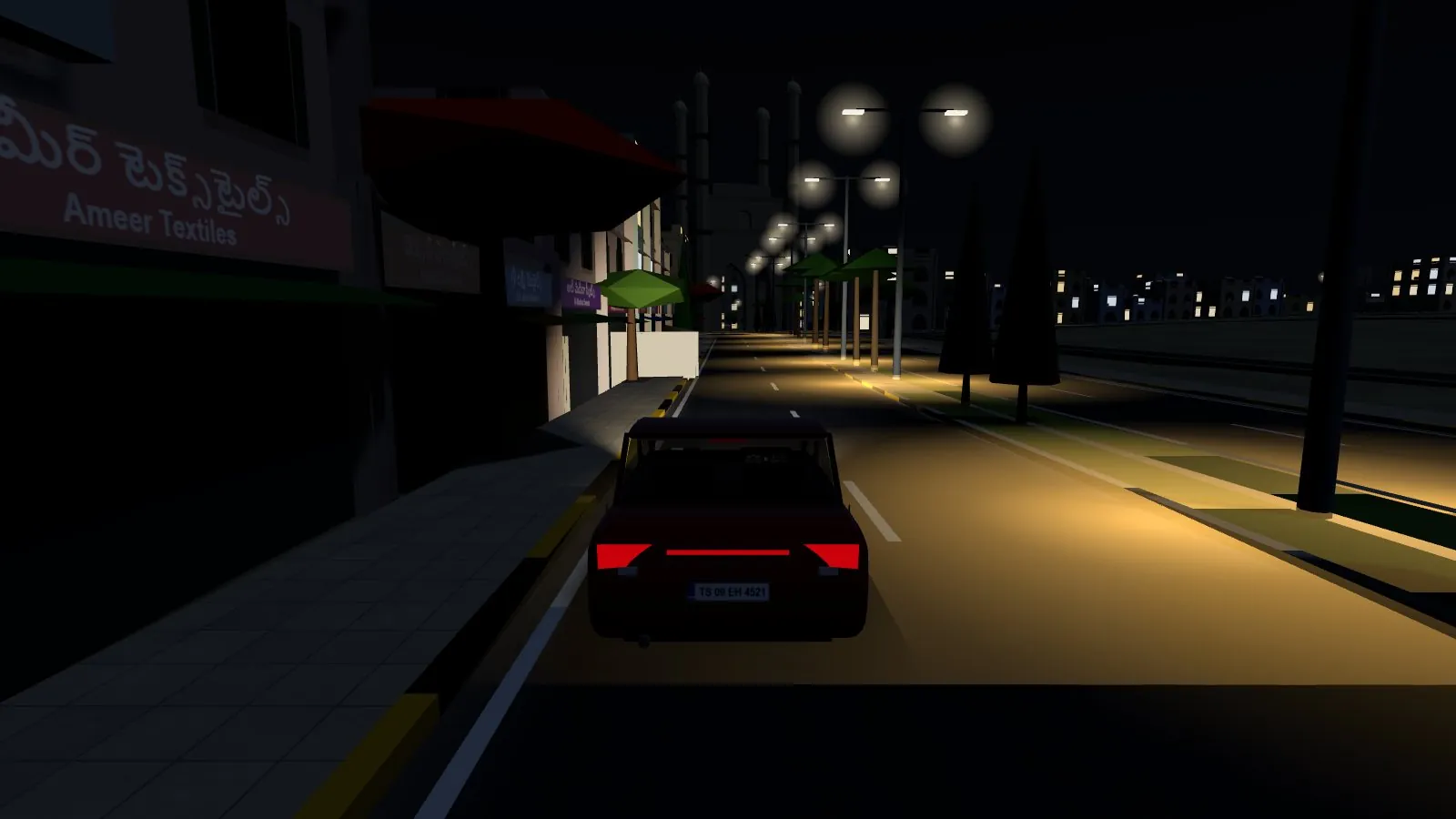
In Sawari you pick the time of day before you start: Morning, Midday, Evening or Night. In Evening and Night, the street lamps come on, with warm pools of light on the road below them, windows light up in the buildings, and every vehicle in the traffic shows white lamps in front and red ones behind. The sky, fog and light change with the hour, so distances feel shorter and the road beyond the lamps fades into the dark. The features page shows how the different times look.
Your headlights come on by themselves in Evening and Night, and you can switch them off and on with L. Try a stretch with them off and you will see how much they matter, even under street lamps. Your brake lights glow brighter when you brake, as on a real car.
The game has one headlight setting, so there is no high beam to practise dipping, and every AI vehicle has working lights, unlike the real road. What it is good for is getting used to judging gaps, speed breakers, junctions and signals in the dark before you do it for real. The Necklace Road route at night, round the lake, is a gentle first drive; the Old City is a harder one. For rain at night, read our monsoon driving guide too.
Frequently asked questions
When should I use high beam?
Only on dark roads with nobody coming towards you and nobody close in front. Dip to low beam as soon as you see an oncoming vehicle or come up behind someone, and on lit city roads low beam is all you need.
What should I do if an oncoming driver dazzles me with high beam?
Slow down, look towards the left edge of your lane rather than at the lights, and keep going straight until they have passed. Do not flash your high beam back at them, as that leaves two blinded drivers.
How do I stay awake on a late drive?
Do not start a long drive tired. If you feel your eyes closing, your head nodding or you cannot remember the last few minutes, stop somewhere safe and rest. Open windows and loud music do not fix tiredness.
Does Sawari have a night mode?
Yes. Choose Night or Evening as the time of day before you start. Street lamps, lit windows and every vehicle's lights come on, and you can switch your own headlights on and off with the L key.
Sawari is a practice simulator. It does not replace lessons with a licensed instructor or the official RTA test. Always follow the signs, signals and traffic police on the real road.