Hyderabad traffic hotspots and peak hours: where it jams, when, and how to plan around it
Hyderabad traffic peak hours and hotspots: the IT corridor, Kukatpally, Ameerpet, Panjagutta, Mehdipatnam, LB Nagar, Secunderabad and how to plan.
Hyderabad traffic peak hours fall on weekday mornings, roughly 8 to 11 am, and evenings, roughly 5 to 9 pm, and the worst hotspots are the IT corridor, the Kukatpally and Ameerpet belt, Panjagutta, Mehdipatnam, LB Nagar and Secunderabad. Rain and road works can make any of them much worse. Knowing where and when the city jams lets you plan a drive that is shorter and far less stressful.
This guide is based on what Hyderabad and Cyberabad traffic police and local news have reported. We have not invented rankings; where we quote a figure, we say where it comes from.
How bad is Hyderabad traffic?
Bad, but not the worst in India. In the TomTom Traffic Index for 2025, Hyderabad was ranked 47th among cities worldwide for congestion, behind several other Indian cities including Bengaluru and Pune. The same coverage reported a small improvement on the year before.
A city-wide number hides a lot, though. Hyderabad can feel easy on a Sunday morning and grind to a halt on a wet Wednesday evening. What matters to you as a driver is which roads you use and when.
Hyderabad traffic peak hours
Weekday mornings and evenings
The basic pattern follows the working day. Local reports on the IT corridor have quoted peak hours of about 8 to 11 am and 5 to 8 pm, and traffic police have quoted 8.30 to 11 am and 5 to 9 pm for the roads around KBR Park in Jubilee Hills. In practice, plan for the morning peak to run until late morning and the evening peak to last well past dark.
The IT corridor runs late
The IT corridor has its own rhythm. Offices and shifts start and end at different times, so traffic officials have described heavy movement there in the morning and again in the evening, running to nearly midnight. Cyberabad traffic police have repeatedly asked IT companies to stagger log-out times, encourage carpooling and use company buses to spread the load.
Weekends, festivals and events
Weekends are usually lighter in the morning but busy around malls, lakes and temples in the evening. Festivals, the Numaish exhibition, political rallies, cricket matches and Ganesh immersion bring diversions and heavy traffic to particular areas, usually announced in advance by the traffic police.
Hyderabad's well-known traffic hotspots
IT corridor: Gachibowli, HITEC City and Madhapur
The western IT district is the area most often reported as congested. Local reports have named Cyber Towers Circle as the main bottleneck linking Madhapur, HITEC City and Kukatpally, with IKEA junction, Wipro junction, Kothaguda and Bio-Diversity junction also slowing badly at busy times. The IIIT junction in Gachibowli has had traffic restrictions since April 2026 for flyover and underpass construction, and police advised avoiding it at peak hours where possible.
Kukatpally and JNTU
The road from Kukatpally and JNTU towards HITEC City carries a heavy daily flow into the IT district. Cyberabad traffic police have been studying a dedicated carriageway from JNTU to Raidurgam, which tells you how much pressure that link is under.
Ameerpet, Panjagutta and Khairatabad
The central belt between Ameerpet, Panjagutta and Khairatabad connects the west of the city to the old centre, and many cross-city trips pass through it. Rain-day reports have named Khairatabad, Raj Bhavan Road and Lakdi-ka-Pul among the stretches that jam. With flyover works narrowing roads near KBR Park, police have advised drivers heading towards Panjagutta and Ameerpet to use alternative roads.
Jubilee Hills and Banjara Hills
The steel flyover works around KBR Park have narrowed the carriageway between Jubilee Hills Check Post and the Sagar Society side, and between TV9 junction and KBR Park. Traffic police have pointed drivers to Banjara Hills Road No. 1, Road No. 10 and Yusufguda as alternatives while the work goes on.
Mehdipatnam
Mehdipatnam is where the PVNR Expressway to the airport begins and several busy roads meet, including the Masab Tank stretch. It is commonly named by motorists among the junctions that struggle at the busiest hours.
LB Nagar, Secunderabad and Paradise
LB Nagar, on the eastern side, is where traffic from the Vijayawada highway and the eastern suburbs meets the city, and it is regularly named among the busy junctions. In Secunderabad, the roads around Paradise Circle and the railway station jam on wet days, and elevated corridor works between Bowenpally and Paradise have caused long delays. During those diversions, a traffic officer told reporters that jams were no longer limited to peak hours.
Other stretches come and go with construction and drainage works, so treat this as a guide to the usual suspects rather than a fixed list.
Why these places jam
- Office hours. Huge numbers of people travel to the same few districts at the same times, especially the IT corridor.
- Construction. Flyovers, underpasses and elevated corridors are being built at several busy junctions. Barricades and machinery narrow the road for months, and traffic spills into neighbouring lanes and colony roads.
- Junction design. Many big roads meet at a few signalled junctions, with U-turns and free lefts nearby. Vehicles cutting across to reach a U-turn, or stopping in the free-left lane, slow everyone behind them. Our guide to U-turns in Hyderabad covers this.
- Rain. Even a drizzle slows Hyderabad down, and heavy rain floods low junctions. Local reports have described snarls across the city on consecutive days of rain.
- Kerbside stopping. Buses, autos and cabs stopping outside malls, metro stations and offices take a lane away exactly where traffic is heaviest.
How to plan around Hyderabad traffic
Change the time, not just the route
The most effective thing you can do is avoid the peaks. Leaving half an hour earlier in the morning, or waiting until after the evening rush, often saves more time than any shortcut. If your office allows flexible hours, use them.
Check a live traffic app before you leave
Live traffic in map apps is the best guide to what the roads are doing right now. Check it just before you set off, not the night before, and let it suggest a route. Set your destination before you move and keep the phone mounted.
Know your alternatives
For regular trips, learn one or two alternative routes in advance, so you are not trying new colony roads in the dark. Flyovers and the Outer Ring Road can take you round the worst junctions; our guide to driving on flyovers helps with ramps and lane choice. Respect residential streets if the app sends you through them: slow down and watch for children and parked cars.
Follow traffic police advisories
Diversions for construction, events and rain are announced by the Hyderabad Traffic Police and, for the IT corridor and western suburbs, by Cyberabad traffic police, usually on social media. Check them on festival days and whenever heavy rain is forecast. If you are heading to the airport, see our guide to driving to Hyderabad airport.
Be extra careful when it rains
Wet roads, flooded junctions and frustrated drivers are a bad mix. Leave much more time, avoid known flooding spots and never drive into water when you cannot see the road surface. Our monsoon driving guide has the details.
Practising busy traffic in Sawari
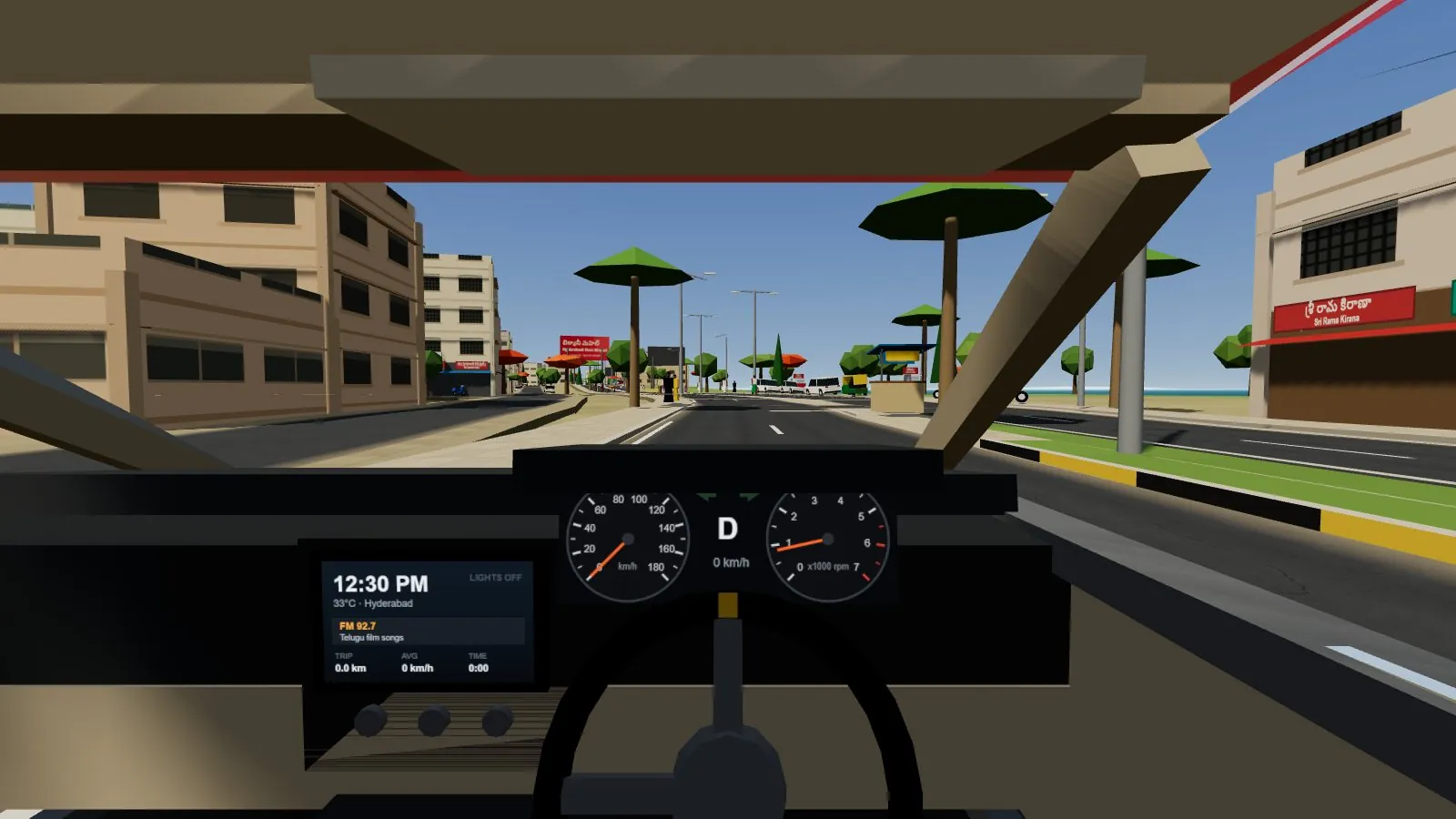
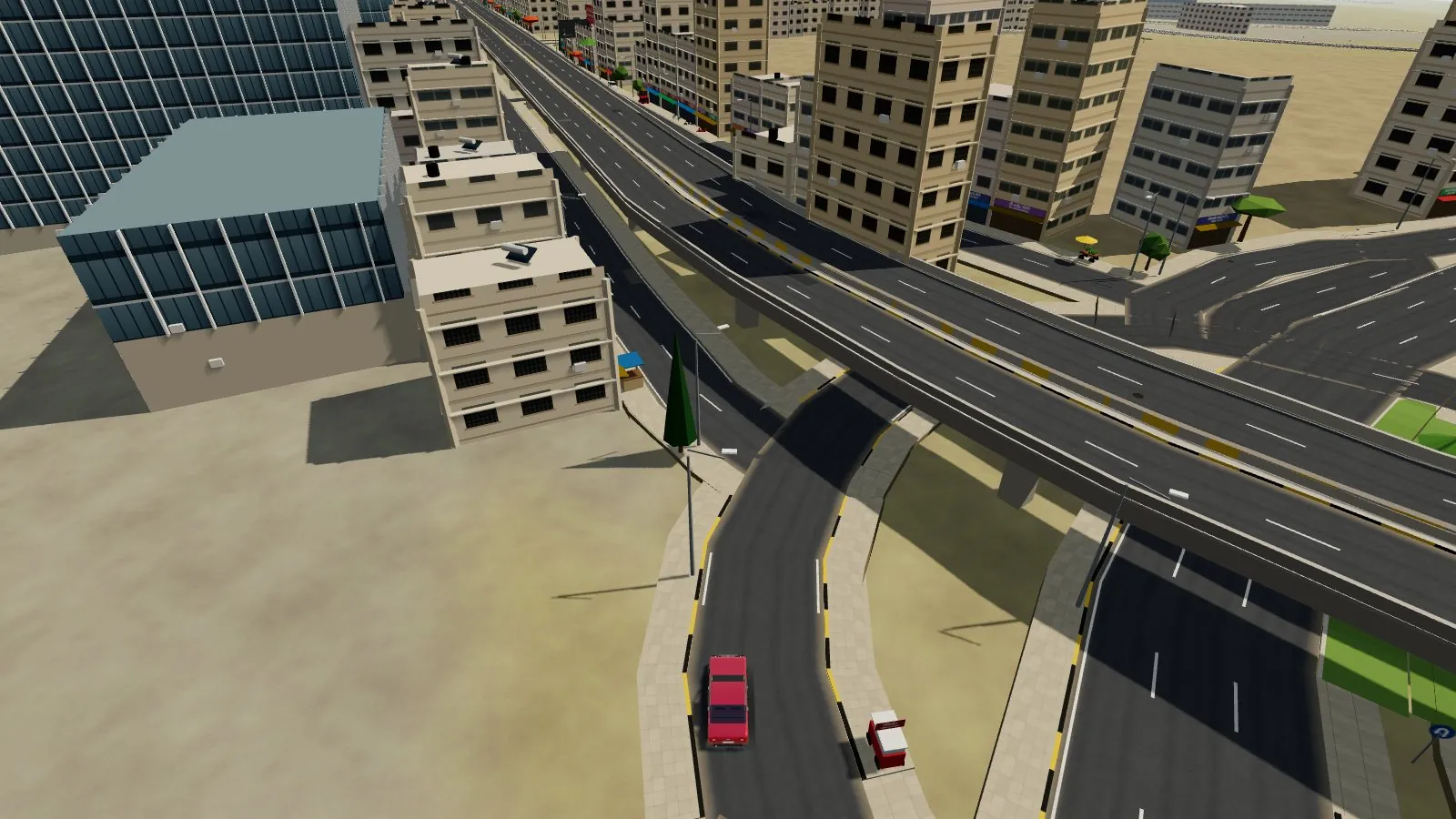
Sawari is a free browser driving simulator on five real Hyderabad routes. It cannot predict a real jam and it has no rain, but it lets you practise driving in heavy traffic without any risk. The Cyber Towers to Jubilee Hills route runs from the IT corridor, over the Durgam Cheruvu cable bridge and along Road No. 45 and Road No. 36, so it covers roads mentioned in this guide. See our route guide for what to expect.
Set the traffic level to Dense and practise the habits that matter in a crawl: smooth braking, signalling with Q and E, checking around you with the mouse before a lane change, and leaving room for buses and autos that stop without warning. The debrief at the end lists every fault, so you can see whether you stayed calm and tidy.
Frequently asked questions
What are the peak traffic hours in Hyderabad?
Weekday mornings from roughly 8 to 11 am and evenings from roughly 5 to 9 pm are the worst, with the IT corridor often slow well into the night. Exact times vary by area and change when it rains or when road works are under way.
Which areas of Hyderabad have the worst traffic?
The IT corridor around Gachibowli, HITEC City and Madhapur is the most often reported, along with Kukatpally and JNTU, Ameerpet, Panjagutta, Mehdipatnam, LB Nagar and Secunderabad. Areas with flyover or elevated corridor works can be slow at any hour.
Where can I check Hyderabad traffic advisories?
Hyderabad Traffic Police and Cyberabad Traffic Police publish diversions, closures and rain advisories on their websites and social media. Check them before festivals, rallies, big matches and on heavy rain days.
Does rain make Hyderabad traffic worse?
Yes, a lot. Waterlogged junctions slow everything down, and police have repeatedly asked IT companies to stagger or bring forward log-out times on heavy rain days to keep the roads moving.
Sawari is a practice simulator. It does not replace lessons with a licensed instructor or the official RTA test. Always follow the signs, signals and traffic police on the real road.